Comparisons
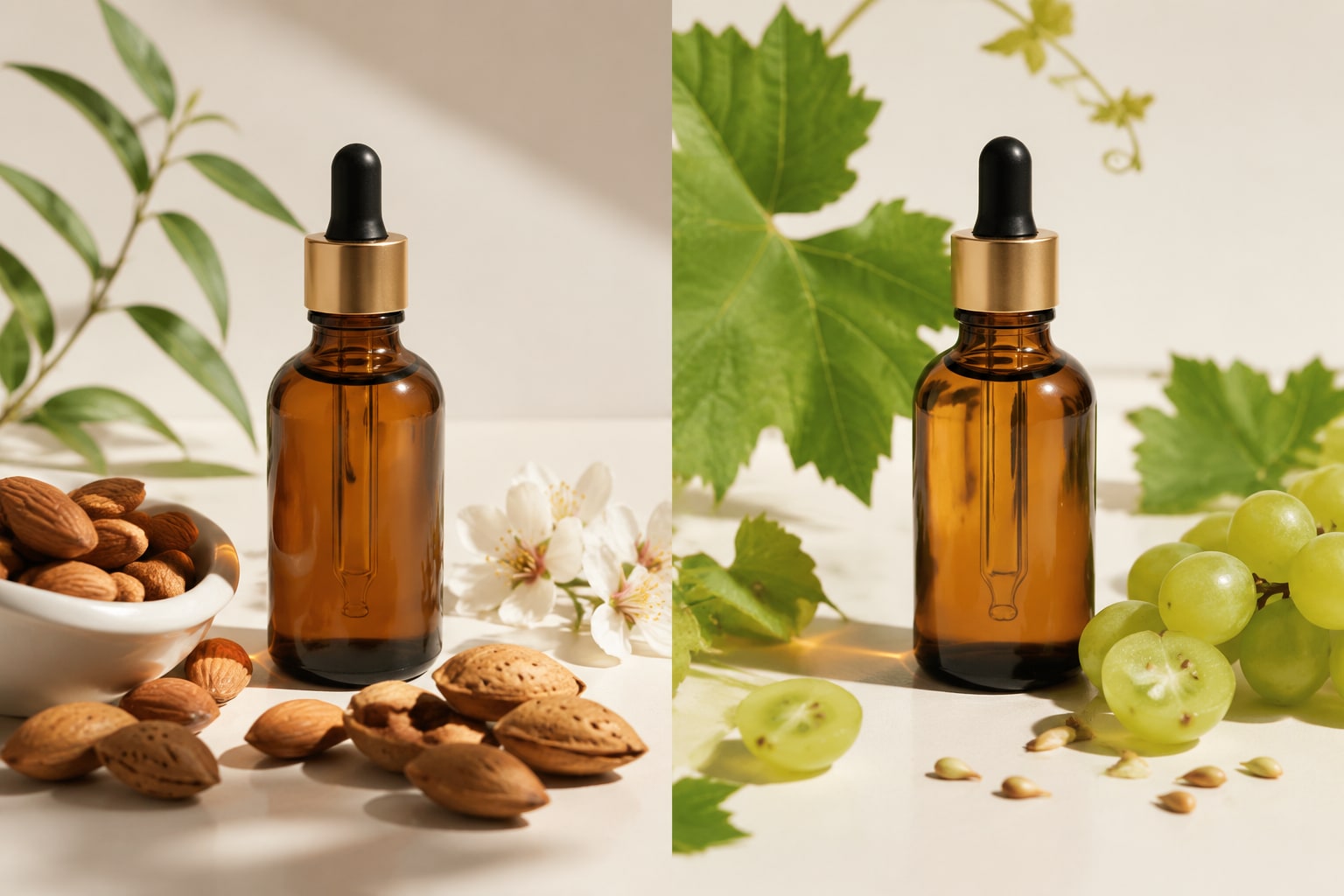
Almond vs Grapeseed Oil for Hair: Which Is Lighter?
Almond vs grapeseed for hair: which is lighter, which softens dry ends, and how to choose for fine or humid-weather routines.
Understand rosemary vs tea tree oil for scalp routines, dilution requirements, scent tolerance, and oily-scalp fit with comparison tables.
Rosemary oil and tea tree oil are often discussed together because both appear in scalp-focused hair products. In practice they are essential oils that require carrier dilution—not drop-in replacements for argan or jojoba on full length. Rosemary brings an herbal, stimulating ritual feel; tea tree brings a sharp, clarifying note associated with fresh-scalp routines. This comparison covers safe use, scent tolerance, and which profile fits oily vs balanced scalps.
| Factor | Rosemary essential | Tea tree essential |
|---|---|---|
| Product type | Essential oil (dilute) | Essential oil (dilute) |
| Scent | Herbal, camphor-like | Medicinal, sharp |
| Typical use | Weekly scalp massage | Weekly scalp massage |
| Oily scalp fit | Good when diluted | Often preferred |
| Dry scalp fit | Dilute lightly | Use lower drops; can feel drying |
| Leave-in undiluted | Never | Never |
| Carrier needed | Jojoba, grapeseed | Jojoba, grapeseed |
| Same-day wash | Required | Required |
| Length application | Only via diluted carrier pass | Avoid except diluted ends rare |
| Carrier | Rosemary drops | Tea tree drops |
|---|---|---|
| 1 tbsp | 2 max | 1 to 2 max |
| 2 tbsp | 3 to 5 | 2 to 3 |
| 2 tbsp + scalp massage | 3 to 4 weekly | 2 to 3 weekly |
Patch test 24 hours before full scalp application. Discontinue if burn, rash, or headache occurs.
Rosemary is popular in self-care massage routines tied to circulation and relaxation—not proven universal regrowth. Users who enjoy herbal aromatics often stick with rosemary longer, which improves consistency.
Tea tree is associated with clean-feeling scalp after wash in oily or buildup-prone routines. The scent is polarizing; sensitivity is more common than with rosemary.
| You prefer… | Lean |
|---|---|
| Spa-like herbal scent | Rosemary |
| Sharp clean note | Tea tree |
| Minimal aroma | Lower drops of either or carrier-only |
Oily scalp: tea tree in low dilution may feel subjectively fresher; keep sessions brief and wash same day.
Dry scalp: rosemary in gentle dilution with jojoba; avoid high tea tree concentration that feels tightening.
Balanced scalp: alternate oils weekly if both patch-test fine—never stack undiluted.
Essential oils do not replace shampoo. Carrier plus essential still needs cleansing. Heavy carriers (almond, castor) increase wash effort; jojoba and grapeseed keep removal easier.
Do not leave essential-oil blends overnight on scalp unless a professional product label explicitly instructs it—and still prioritize comfort.
Salon blends (e.g., tea tree hair oil products) include formulated carriers and concentrations. DIY requires strict dilution math. Compare label instructions rather than assuming all “tea tree hair oils” match pure essential potency.
One oil only, diluted identically, one session per week, same wash method. Track scalp comfort at 24 hours, root greasiness at 48 hours, and itch—not hair length.
| Session length | Best paired with |
|---|---|
| 1 to 2 minutes massage | Wash within 1 to 2 hours |
| 3 minutes massage | Wash same day, gentle shampoo |
| Scalp-only treatment | Skip heavy leave-in that night |
Rosemary and tea tree sessions both fail cosmetically when users massage aggressively then skip thorough rinse. Fingertip pressure should never scrape or scratch—the goal is comfort, not exfoliation trauma.
Stop diluted scalp treatments and return to gentle cleansing alone if you notice increased flaking, burning, headache from scent, or shedding beyond your normal baseline. Essential oils are cosmetic adjuncts, not dermatology replacements. Persistent symptoms deserve professional evaluation rather than switching from rosemary to tea tree at higher concentration.
If carrier oil reaches mids while massaging, that is acceptable in small amounts. Do not add a second full leave-in oil layer the same day. Lengths that feel dry after scalp-focused weeks still benefit from end-only argan or jojoba on a different day—not stacked essential carriers nightly.
Rosemary oil vs tea tree oil is a scalp ritual and scent choice within strict dilution rules. Tea tree often fits oily, freshness-focused users; rosemary fits herbal massage users with balanced scalps. Neither belongs undiluted on skin or as a full-length leave-in.
Pick the oil you will use consistently at safe concentration, wash out reliably, and stop if irritation appears. Cosmetic scalp comfort—not miracle growth—should be the benchmark.
See best rosemary oil for oily scalp and best tea tree oil for oily scalp. Technique: oil for scalp massage.
Rosemary suits stimulating scalp rituals; tea tree suits clarifying freshness. Both need carrier dilution.
No. Dilute essential oils in a carrier and patch-test first.
Either can, with light carriers and short contact. Tea tree is often chosen for a clean-feel routine.
Rosemary is usually milder than tea tree, but tolerance is personal.
They are cosmetic scalp supports, not proven cures for hair loss. Seek a professional for progressive thinning.
Open the oily-scalp rankings for rosemary and tea tree.
Almond vs grapeseed for hair: which is lighter, which softens dry ends, and how to choose for fine or humid-weather routines.
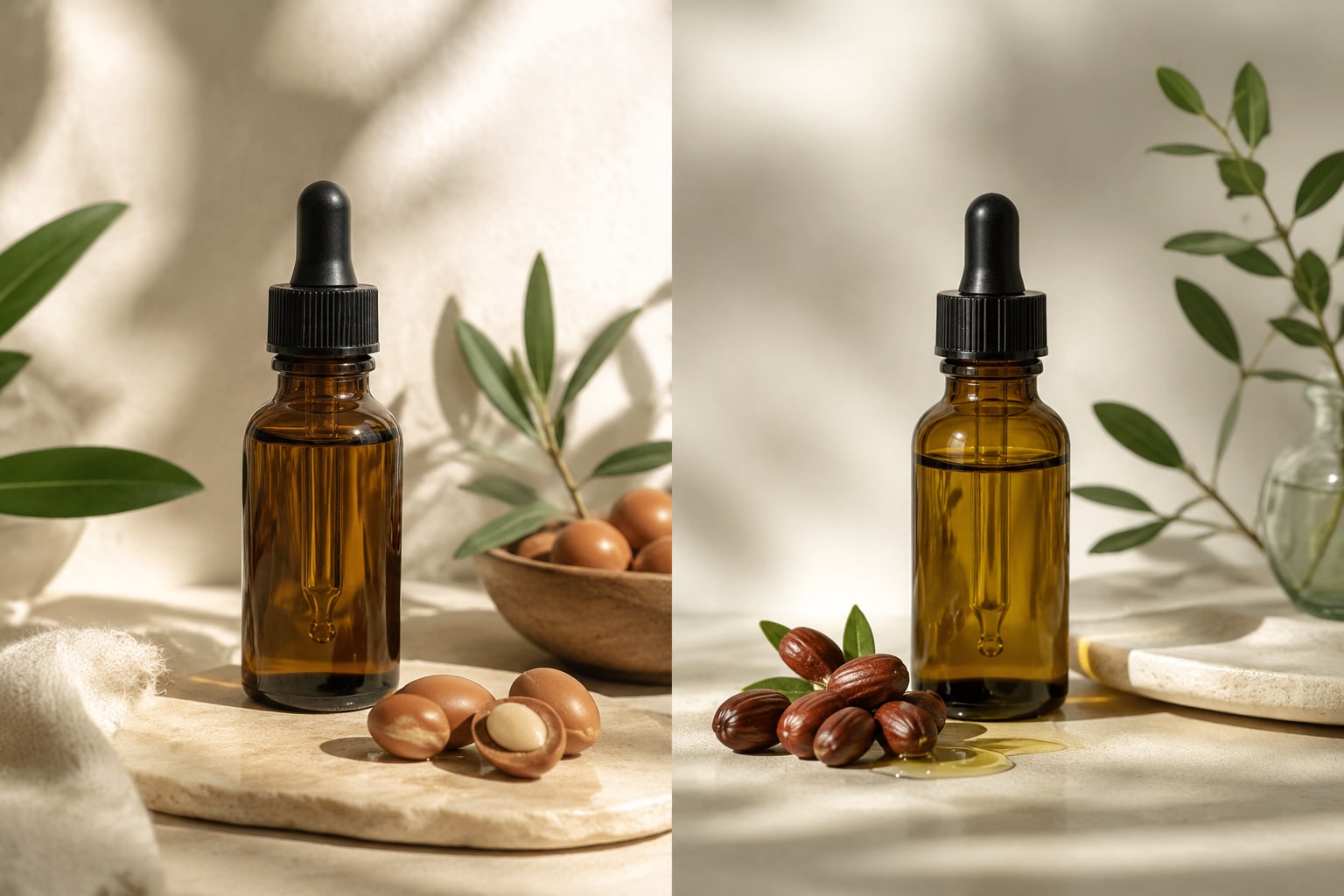
Argan and jojoba compared for shine, frizz control, scalp tolerance, and daily wearability with tables and choose-if guidance.
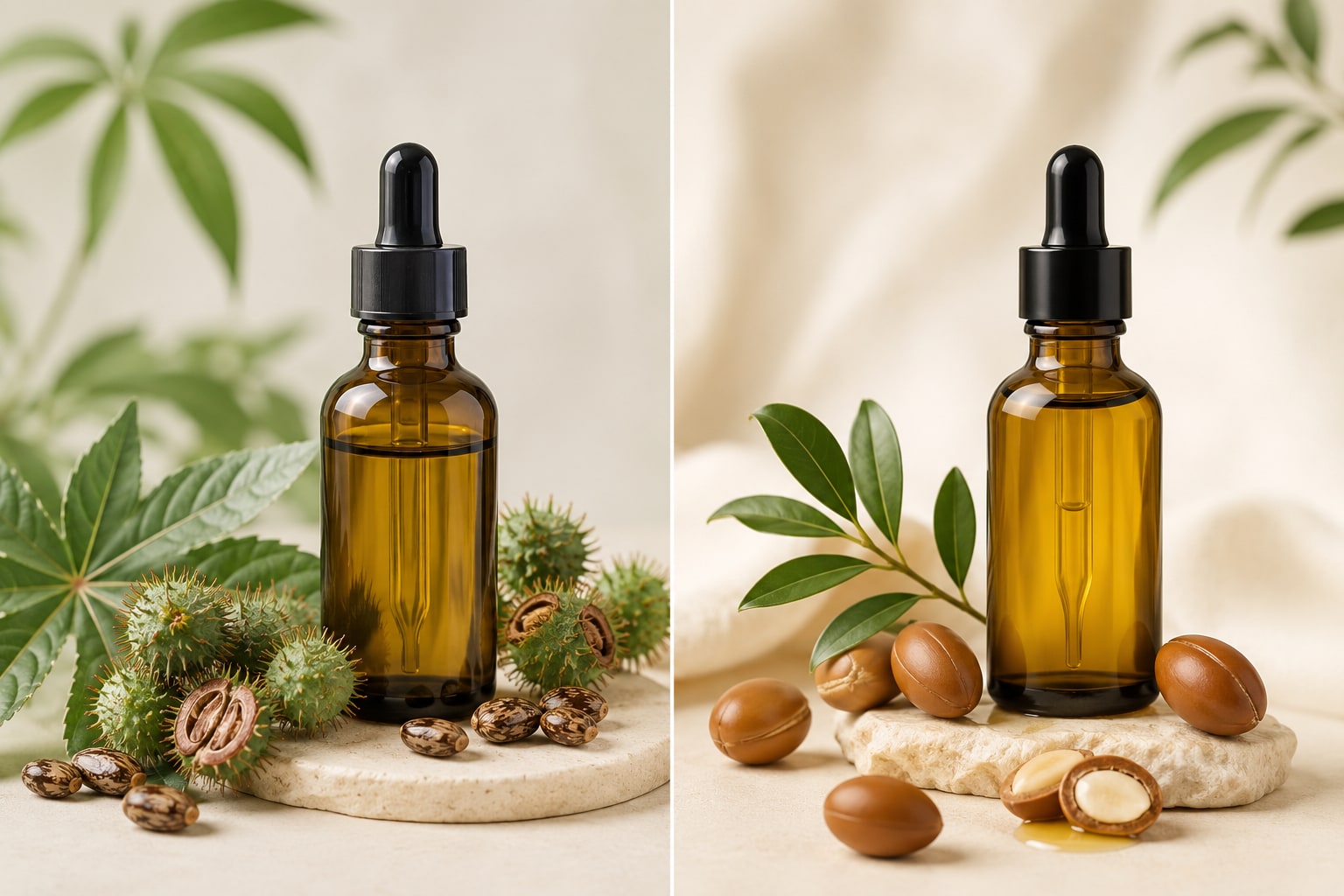
Compare castor and argan oil for texture, shine, buildup risk, and routine fit with side-by-side tables and choose-if guidance.