Comparisons
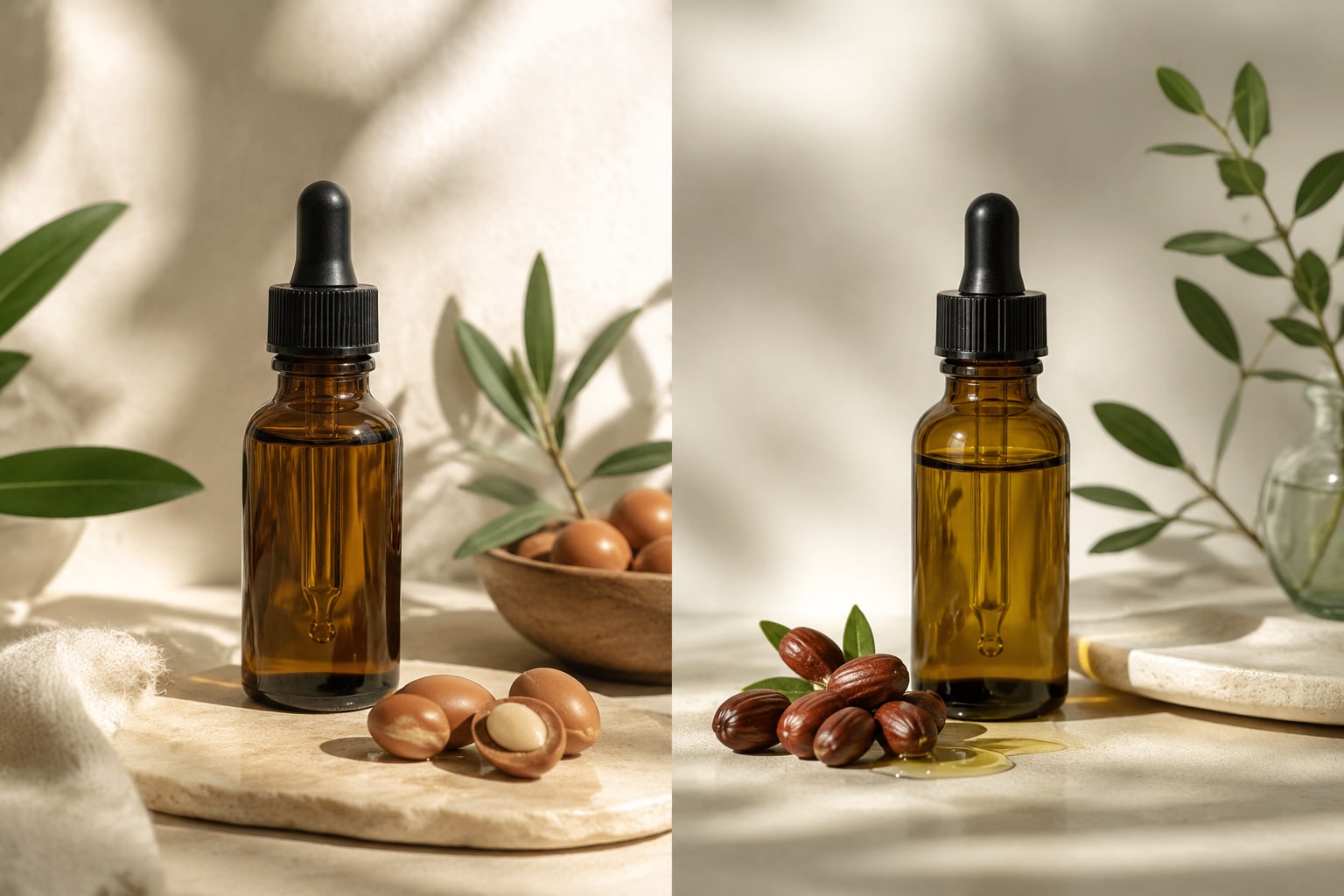
Argan Oil vs Jojoba Oil
Argan and jojoba compared for shine, frizz control, scalp tolerance, and daily wearability with tables and choose-if guidance.
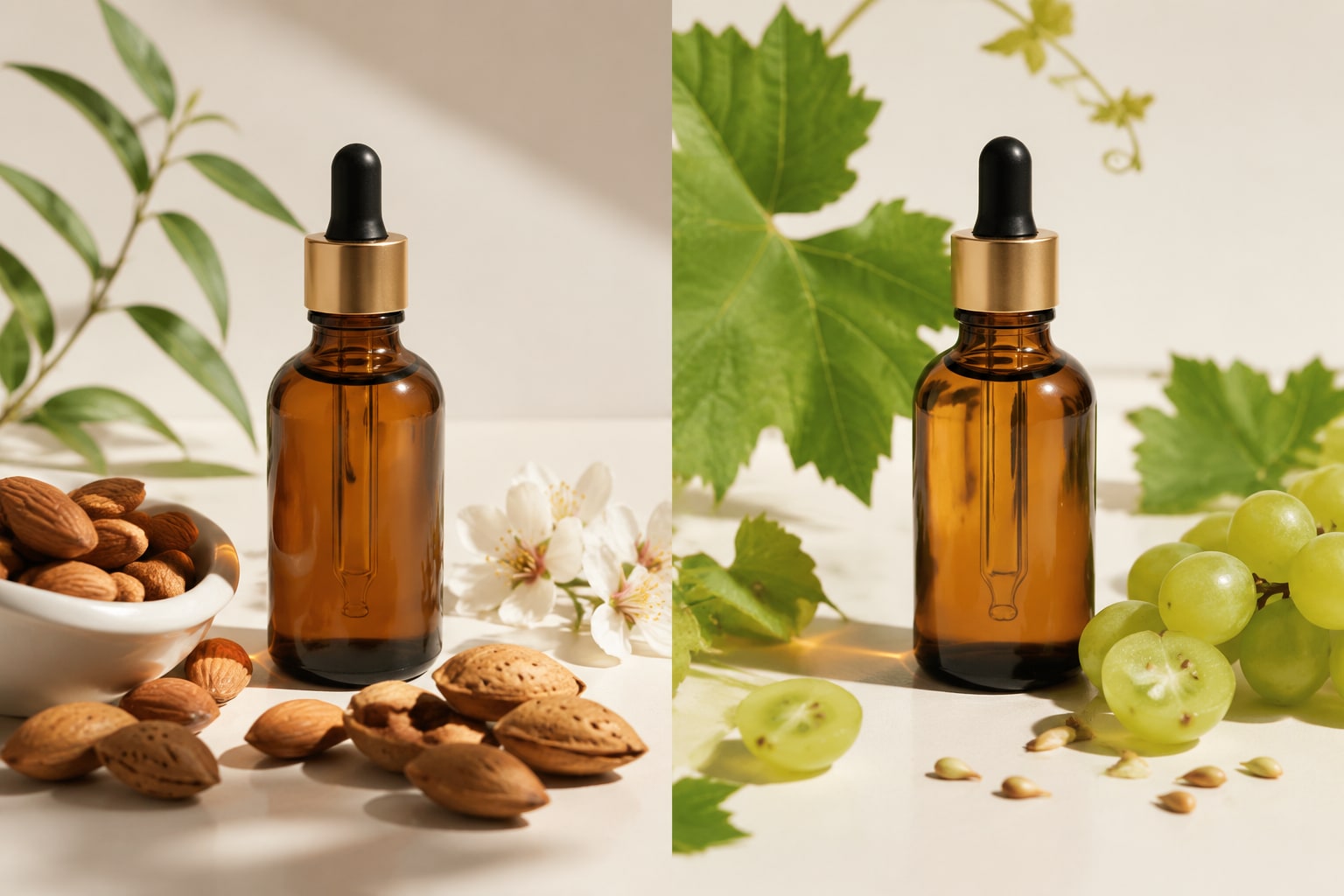
Almond vs grapeseed for hair: which is lighter, which softens dry ends, and how to choose for fine or humid-weather routines.
Almond oil and grapeseed oil are both lightweight carriers popular on fine and medium hair—but they are not identical. Almond offers slightly richer slip and vitamin E softness; grapeseed is nearly weightless and dries down fast. If your hair feels flat with almond, grapeseed may save volume. If grapeseed vanishes before ends soften, almond may add the cushion you need.
| Factor | Almond oil | Grapeseed oil |
|---|---|---|
| Weight | Light to medium-light | Very light |
| Feel | Soft, slightly cushioned | Dry, fast-absorbing |
| Shine | Moderate natural | Subtle |
| Pre-shampoo | Good on dry ends | Light pre-shampoo |
| Leave-in | 2 to 5 drops typical | 1 to 4 drops typical |
| Fine hair | Good with dose control | Often easiest |
| Humid climates | Can feel heavier | Usually safer |
| Nut allergy | Avoid if allergic | Typically nut-free |
| Scalp use | Occasional dilute | Preferred for oily scalp |
Almond’s oleic acid content adds a silky glide that helps detangling on slightly dry mids. It is a step heavier than grapeseed—beneficial on medium hair, risky on very fine hair if overpoured.
Grapeseed spreads fast and disappears quickly. That preserves volume but may require more frequent micro-doses on porous ends.
| Texture | First try |
|---|---|
| Very fine | Grapeseed, 1 to 2 drops |
| Medium dry ends | Almond pre-shampoo weekly |
| Oily roots, dry tips | Grapeseed tips only |
In humid weather, lighter oils reduce the coated, sticky feeling that heavier products amplify. Grapeseed usually wins summer frizz touch-ups. Almond can still work in one-drop finishing if applied to dry flyaways only, not full length.
Dry winter air: almond’s slightly richer film may protect ends better between washes.
Both suit pre-shampoo on ends at teaspoon scale for medium hair. For leave-in, grapeseed defaults lower on the dose table.
| Method | Almond | Grapeseed |
|---|---|---|
| 30-min pre-shampoo | 1 to 2 tsp on ends | 1 tsp on ends |
| Damp seal | 2 to 4 drops | 1 to 3 drops |
| Dry halo smooth | 1 to 2 drops | 1 drop |
Nut allergy: avoid sweet almond oil; grapeseed is the clear alternative for carriers and dilution.
Oily scalp: grapeseed as carrier for essential oils; keep almond off roots if grease appears quickly.
Yes. Grapeseed for mid-week touch-ups; almond pre-shampoo before weekly wash on rough ends. Avoid applying both at full leave-in dose the same day.
Fix timing: damp seal after every wash. Week one: almond at three drops. Week two: grapeseed at three drops. Compare root volume at hour six and end roughness on day three.
| Length | Almond leave-in start | Grapeseed leave-in start |
|---|---|---|
| Chin | 1 to 2 drops | 1 drop |
| Shoulder | 2 to 3 drops | 2 drops |
| Mid-back | 3 to 4 drops | 2 to 3 drops |
| Waist+ | 4 to 5 drops sectioned | 3 to 4 drops sectioned |
Increase pre-shampoo amounts separately—teaspoon scale on ends only before wash day—not by doubling leave-in drops when hair feels rough.
Almond’s slightly richer slip can help when blow-drying medium hair if applied in a thin layer on damp ends before heat. Grapeseed may evaporate faster under heat, which preserves volume but offers less frizz polish. If you diffuse curls, grapeseed refresh doses often outperform almond because curl definition stays intact.
Neither oil replaces a dedicated heat protectant when your routine relies on high heat tools daily.
Almond oil vs grapeseed oil is a weight micro-decision within the light-oil category. Grapeseed maximizes volume and oily-scalp tolerance. Almond maximizes end softness for medium textures willing to watch dose closely.
Start grapeseed if fine or humid; start almond if ends stay rough on grapeseed alone. Both beat heavy oils for daily fine-hair wear when measured in drops.
Compare best almond oil for dry damaged hair and best grapeseed oil for fine hair. Profiles: almond and grapeseed.
Still unsure after this compare? Try jojoba for fine hair or grapeseed for fine hair.
Grapeseed is usually lighter. Almond sits in a medium soft-finish range.
Grapeseed or very small almond doses on ends. Patch-test almond if you have nut allergies.
Almond often feels more conditioning; grapeseed suits users who reject richer oils.
Yes — grapeseed to spread, almond to soften ends.
No — avoid if you have nut allergies. Choose grapeseed or another nut-free carrier.
Open the fine-hair or dry-damaged rankings for each oil.
Argan and jojoba compared for shine, frizz control, scalp tolerance, and daily wearability with tables and choose-if guidance.
Compare castor and argan oil for texture, shine, buildup risk, and routine fit with side-by-side tables and choose-if guidance.
See how castor and coconut oils differ in slip, sealing power, protein sensitivity, and removal effort, with comparison tables.