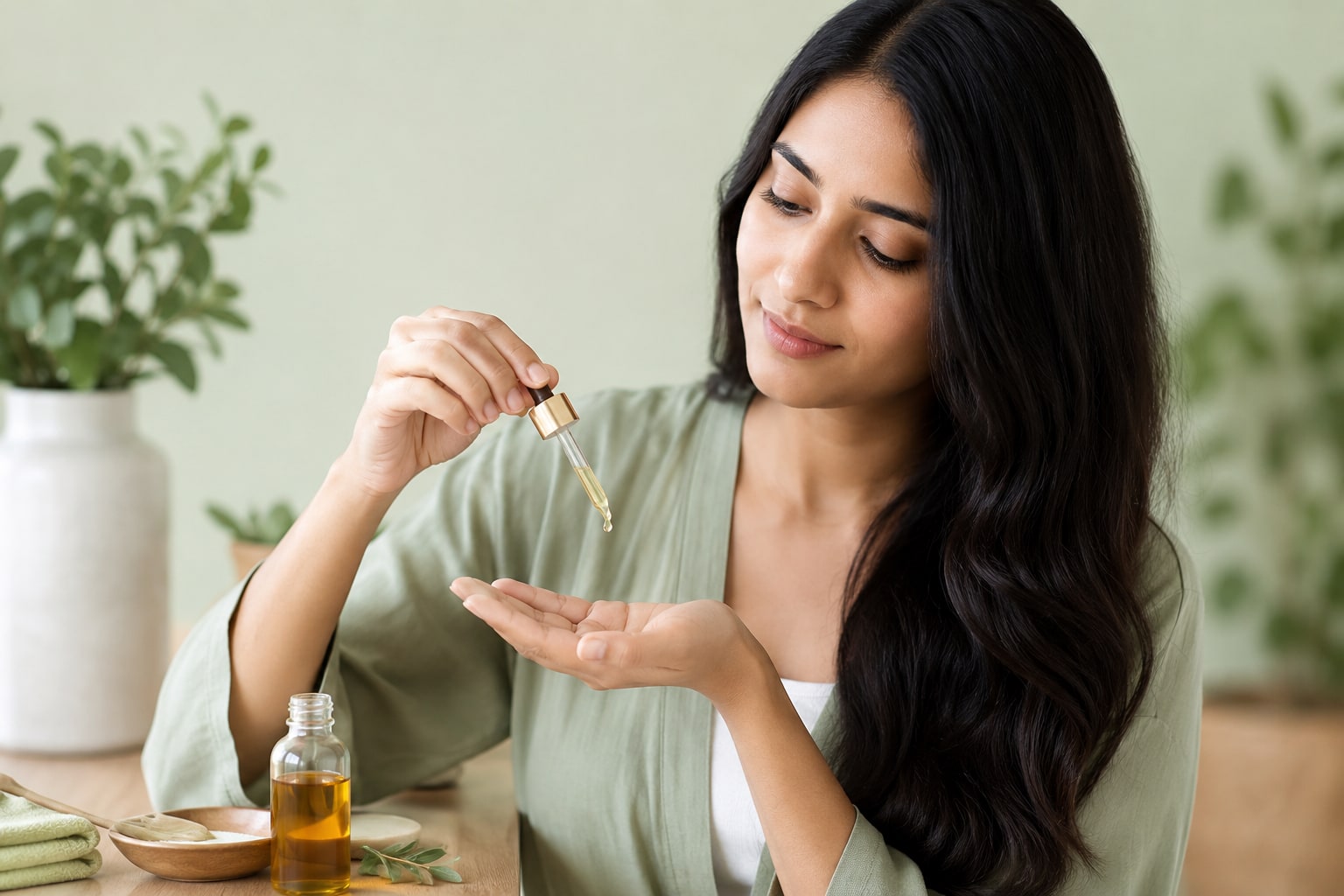
How-To
How Much Hair Oil Should You Use?
A practical dosing guide for fine, medium, and thick hair with measurement tables, oil-type ranges, and a quick decision checklist.
Build a gentle scalp massage routine with the right oil blends, pressure techniques, session length, and post-treatment cleansing steps.
Scalp massage with oil can feel relaxing and may support a comfortable scalp environment when done gently and washed out on schedule. It is not a substitute for medical care when you have persistent itch, patchy thinning, or inflamed skin. From a cosmetic standpoint, the practice works best as a brief weekly ritual with diluted product, light fingertip pressure, and same-day cleansing.
This guide covers which oils suit scalp massage, how to dilute essential oils safely, step-by-step technique, and how often to repeat without triggering greasiness or buildup.
Realistic cosmetic goals: relaxation, distributing natural oils along part lines, supporting a clean-feeling scalp after wash, pairing with a consistent self-care routine.
Not guaranteed: faster hair growth, reversing medical hair loss, curing dandruff or dermatitis without professional diagnosis.
If you notice sudden shedding, bald patches, or painful scalp changes, pause home treatments and consult a professional.
| Oil | Profile | Best for |
|---|---|---|
| Jojoba | Lightweight, sebum-like | Oily-prone scalps, frequent washers |
| Grapeseed | Very light | Sensitive scalps needing minimal residue |
| Sweet almond | Moderate slip | Dry scalp with normal wash schedule |
| Coconut (fractionated or small amount) | Medium | Dry scalp pre-wash only |
| Castor (diluted) | Heavy | Occasional use on dry scalp, not daily |
| Rosemary essential (diluted) | Aromatic | Weekly ritual users who tolerate scent |
| Tea tree essential (diluted) | Clarifying note | Oily scalps, short contact |
Never apply undiluted essential oils directly to scalp skin.
| Session type | Carrier volume | Essential oil max |
|---|---|---|
| Fine hair / sensitive scalp | 1 tbsp carrier | 2 to 3 drops |
| Standard weekly massage | 2 tbsp carrier | 3 to 5 drops |
| Thick hair, full scalp | 2 to 3 tbsp carrier | 5 to 6 drops |
Add castor at most one part castor to four parts carrier if you want richer slip—avoid pure castor on scalp for long contact.
| Question | If yes |
|---|---|
| Is today a wash day or tomorrow morning? | Proceed with short session |
| Scalp itchy from product buildup? | Clarify first; massage after |
| Active burning or open cuts? | Skip until healed |
| Oily roots by day two always? | Use jojoba/grapeseed only; 2-minute session |
| Just colored or chemically treated scalp? | Wait 48 to 72 hours; patch test |
Create four to six parts from hairline to crown. Clips keep sections visible. Full coverage matters less than gentle contact along each part line.
Use a dropper to place small dots along each part—roughly 2 to 4 drops of blend per part, not per drop of pure essential oil. Spread with fingertips, not nails.
Use circular motions for 60 to 180 seconds total—not 20 aggressive minutes. Pressure should feel pleasant, not painful. Avoid scratching.
| Zone | Technique |
|---|---|
| Hairline | Light circles with three fingers |
| Mid-scalp parts | Small circles along part lines |
| Crown | Gentle pad pressure, no digging |
| Nape | Soft strokes downward |
If oil remains on fingers, press lightly on mids and ends. Do not add fresh oil to lengths during scalp-focused session unless ends are severely dry.
| Contact time | Who it suits |
|---|---|
| 15 to 30 minutes before wash | Oily scalps, beginners |
| 1 to 2 hours before wash | Standard weekly ritual |
| Overnight (rare) | Dry scalp only; not for essential-heavy blends |
Wash with gentle shampoo. Emulsify on damp hair if oil feels heavy. Condition lengths as usual.
| Scalp type | Suggested frequency |
|---|---|
| Oily | Every 10 to 14 days, 1 to 2 minute massage |
| Balanced | Every 7 to 10 days, 2 to 3 minutes |
| Dry | Every 7 days, up to 3 minutes; same-day wash |
| Sensitive | Every 14 days; patch test first; minimal essential oil |
Daily scalp oiling is rarely necessary and often increases wash frequency.
Light weekly blend: 2 tbsp jojoba + 3 drops rosemary essential.
Oily-scalp blend: 2 tbsp grapeseed + 2 drops tea tree essential.
Dry-scalp blend: 1 tbsp almond + 1 tbsp jojoba + 2 drops rosemary.
Patch test behind ear 24 hours before full scalp use when trying a new essential oil.
| Issue | Likely cause | Adjustment |
|---|---|---|
| Greasy roots next day | Too much oil or long contact | Less blend; shorter session; wash sooner |
| Itch after massage | Undiluted essential or allergy | Rinse immediately; dilute more; discontinue oil |
| Headache from scent | Strong essential concentration | Reduce drops or switch to carrier-only |
| No comfortable feeling | Pressure too hard | Lighter touch; shorter time |
Oil for scalp massage works as a gentle, wash-day-adjacent ritual—not a daily heavy treatment. Choose light carriers for oily scalps, dilute essential oils strictly, massage with fingertips for one to three minutes, and cleanse the same day. Track scalp comfort the way you track end softness: if greasiness or itch increases, reduce frequency before abandoning the practice entirely.
Used with realistic expectations and clean technique, scalp massage can fit neatly into a broader hair oil routine without overwhelming roots or stealing volume from your lengths.
Open best rosemary oil for oily scalp or best tea tree oil for oily scalp. Compare rosemary oil vs tea tree oil.
Dilute essential oils in a carrier, part hair in sections, massage gently for a few minutes, then wash within a few hours unless the product is labeled leave-in.
Jojoba and grapeseed are common carriers. Rosemary and tea tree are common essentials — always diluted.
No. Cosmetic scalp oils support comfort and routine. Progressive thinning or scalp disease needs a professional.
One to three times weekly is a common range. Stop if irritation appears.
Sometimes with a light carrier and short contact. Heavy overnight root oiling often backfires.
Rinse promptly, simplify the blend, and patch-test. Seek care if irritation persists.
A practical dosing guide for fine, medium, and thick hair with measurement tables, oil-type ranges, and a quick decision checklist.
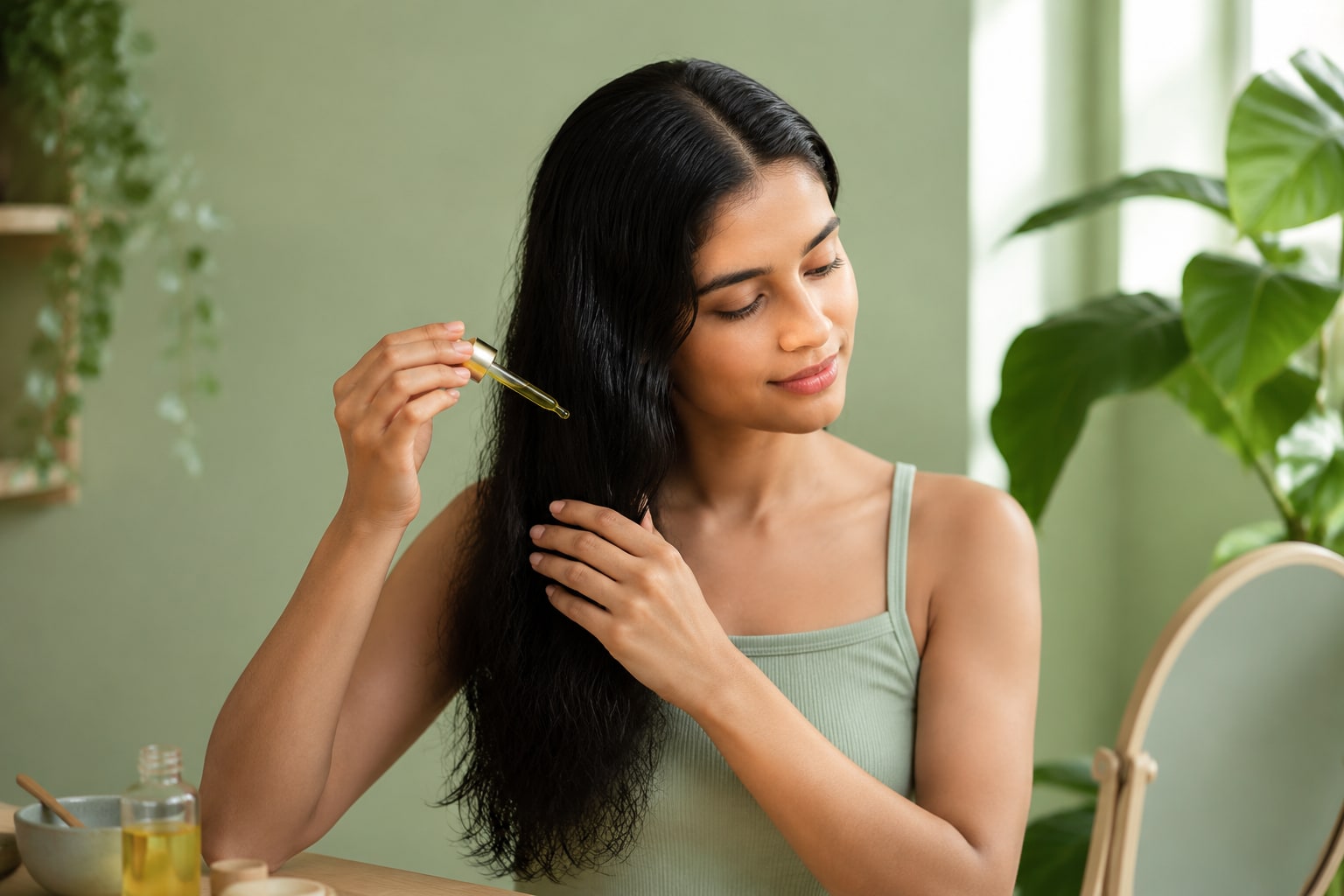
Learn how often to oil your hair by texture, wash schedule, and scalp response, with frequency tables and a practical decision checklist.
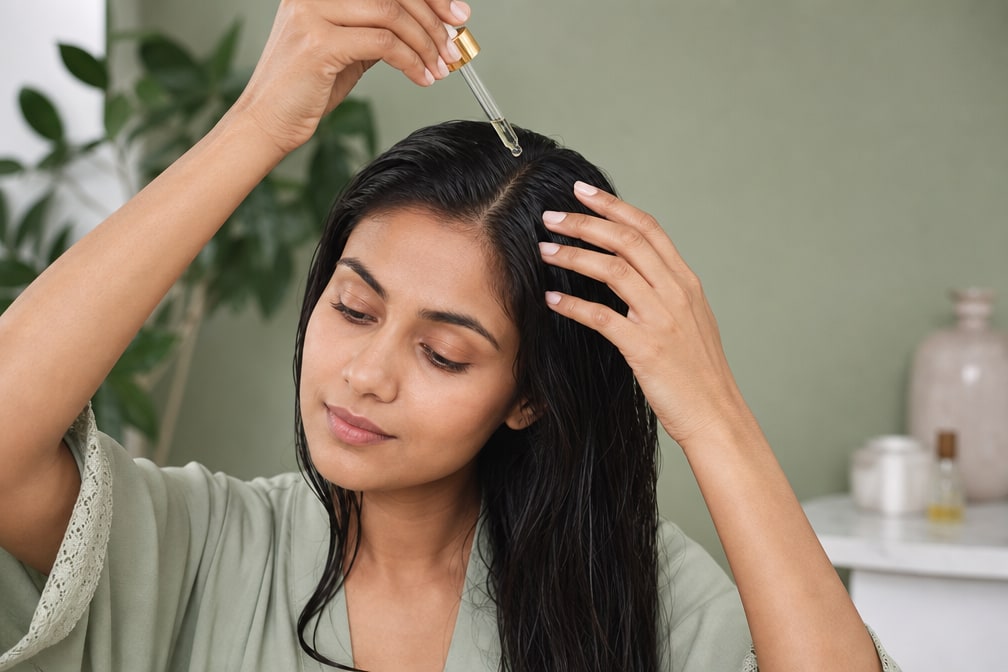
Apply hair oil with dose tables, timing checklist, and sectioning steps so fine, curly, and thick hair stay soft—not greasy.