Comparisons
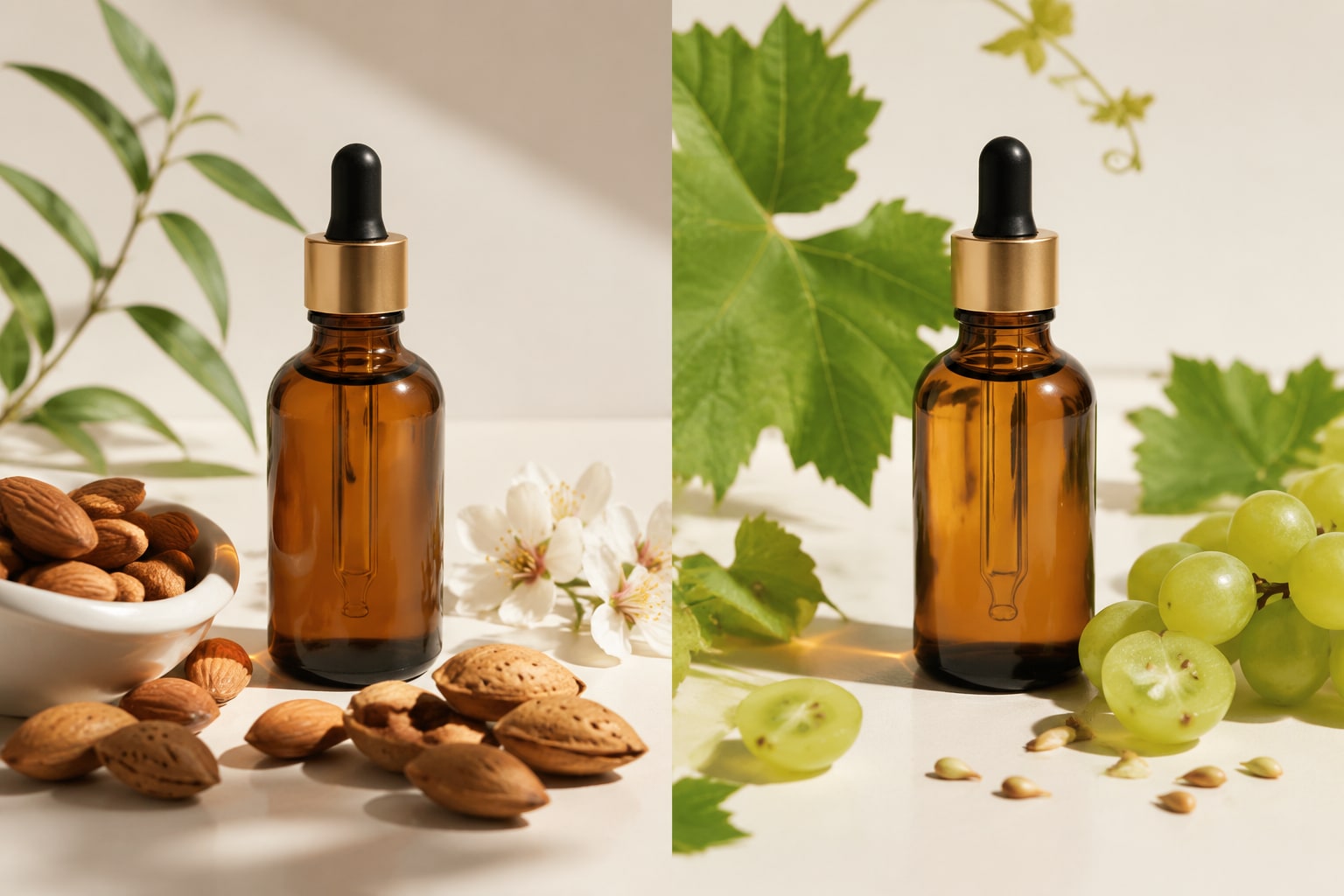
Almond vs Grapeseed Oil for Hair: Which Is Lighter?
Almond vs grapeseed for hair: which is lighter, which softens dry ends, and how to choose for fine or humid-weather routines.
Argan and jojoba compared for shine, frizz control, scalp tolerance, and daily wearability with tables and choose-if guidance.
Argan oil and jojoba oil compete for the same shelf space in many bathrooms—and both can work. Argan skews slightly richer with a polished, anti-frizz finish associated with blow-dry styling. Jojoba skews lighter with a sebum-like balance that oily scalps tolerate better. The right pick depends on whether you prioritize maximum frizz polish or minimum residue.
| Factor | Argan oil | Jojoba oil |
|---|---|---|
| Weight | Light to medium | Very light |
| Finish | Glossy polish | Natural, subtle |
| Frizz control | Strong | Moderate |
| Fine hair | 1 to 3 drops | 1 to 3 drops |
| Scalp use | Occasional light | Often preferred |
| Pre-shampoo | Moderate | Light |
| Humidity | Good polish | Good, less shine |
| Color-treated | Popular finish | Gentle seal |
| Price point | Often higher | Often moderate |
Argan smooths flyaways and halo frizz aggressively for its weight class. It is the default finishing oil for many heat-styled and air-dried routines seeking camera-ready shine.
Jojoba controls frizz by adding slip without the same glossy film. Hair may look healthier but less “glass shine”—preferable if shine reads as grease on your texture.
| Styling goal | Lean |
|---|---|
| Red carpet shine | Argan |
| Invisible maintenance | Jojoba |
| Curly refresh day | Jojoba or argan at 1 drop |
Jojoba’s wax-ester structure mimics scalp sebum; micro-doses along parts before washing suit oily-prone users experimenting with scalp oil.
Argan on roots can flatten fine hair faster than jojoba but works on dry scalp occasional doses when washed out promptly.
Neither is primarily a heavy pre-shampoo oil compared with coconut or castor. Jojoba pre-shampoo helps mild dryness; argan pre-shampoo adds softness but may not justify cost at tablespoon doses.
For deep pre-wash protection, choose coconut or castor—not this pair.
Both rinse easily at drop doses. Buildup appears when users stack full argan under full silicone serum daily. Reduce both by 30 percent when layering.
| Layer partner | Tip |
|---|---|
| Leave-in conditioner | Apply oil after, half usual drops |
| Silicone serum | Use either oil or serum at full dose, not both |
| Styling cream | Prefer jojoba if cream is already rich |
Argan on mids and ends for styling days; jojoba for scalp massage night before wash. Avoid duplicating full leave-in doses same day on fine hair.
Damp seal method after every wash. Three drops per side for shoulder-length medium hair—or match your usual dose identically. Week one argan, week two jojoba. Score frizz at hour four, volume at hour eight, end roughness day three.
“Argan” products vary in purity and blend content—read labels. Jojoba is similarly affected by dilution with other oils. Comparison tests should use products with clear ingredient transparency.
Many users keep jojoba as the default spring and summer oil when humidity makes any richer finish feel greasy, then shift to argan in dry winter months when flyaways and static increase. You do not need two bottles if budget is tight—adjust dose downward in humid weeks instead of switching products.
| Season | Often easier default |
|---|---|
| Humid summer | Jojoba micro-dose |
| Dry winter | Argan polish on ends |
| Shoulder seasons | Match to wash-day frizz severity |
Track scalp oiliness separately from end dryness. Seasonal switches should target the zone that actually changed, not both roots and tips automatically.
When running the 14-day comparison, match total product count to length so the test is fair:
| Length | Drops per application (starting point) |
|---|---|
| Short | 1 to 2 |
| Shoulder | 2 to 3 |
| Long | 3 to 5 |
Apply only to mids and ends unless doing a planned scalp session with jojoba. Argan on scalp for comparison tests usually skews results on fine hair because volume loss gets blamed on the wrong variable.
Argan oil vs jojoba oil splits on finish vs weight. Argan wins frizz polish and styled shine; jojoba wins scalp tolerance and invisible daily wear. Many users keep jojoba for maintenance and argan for styling days.
Run the 14-day dose-matched test, pick the oil that solves your dominant weekly complaint, and combine by zone only if one bottle cannot cover both scalp balance and styled frizz control.
Try best argan oil for color-treated hair and best jojoba oil for fine hair. Guides: argan and jojoba.
Argan leans richer with polished frizz control; jojoba is lighter and closer to sebum-like balance.
Jojoba is usually the safer leave-in near roots. Keep argan on lengths.
Argan often wins for visible polish on dry ends; jojoba wins when you need less residue.
Yes — jojoba first for balance, argan last on ends if you still need shine.
Both can, in drop doses. Start with jojoba if argan feels heavy.
Open the fine-hair or color-treated rankings for each oil.
Almond vs grapeseed for hair: which is lighter, which softens dry ends, and how to choose for fine or humid-weather routines.
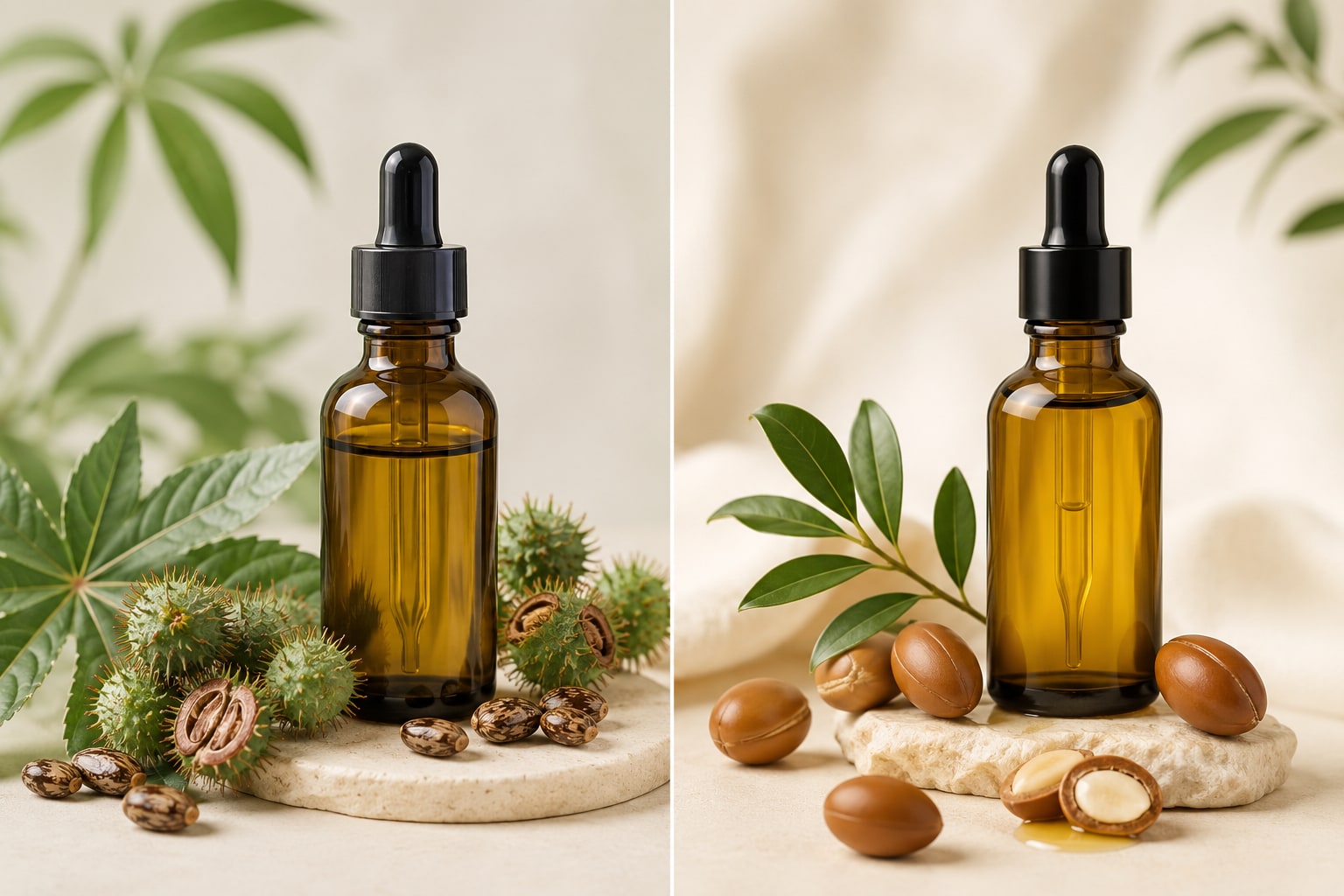
Compare castor and argan oil for texture, shine, buildup risk, and routine fit with side-by-side tables and choose-if guidance.
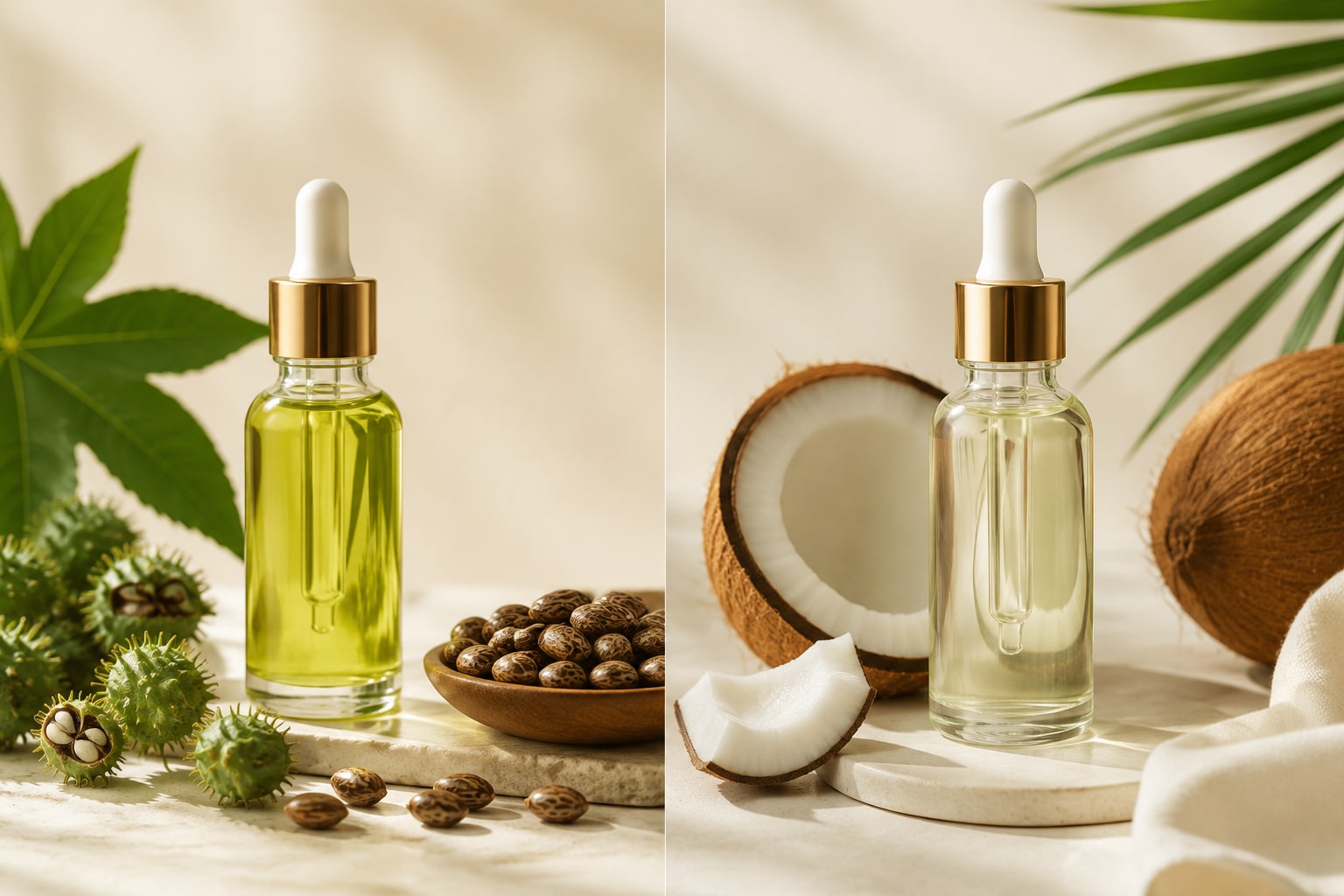
See how castor and coconut oils differ in slip, sealing power, protein sensitivity, and removal effort, with comparison tables.