Comparisons
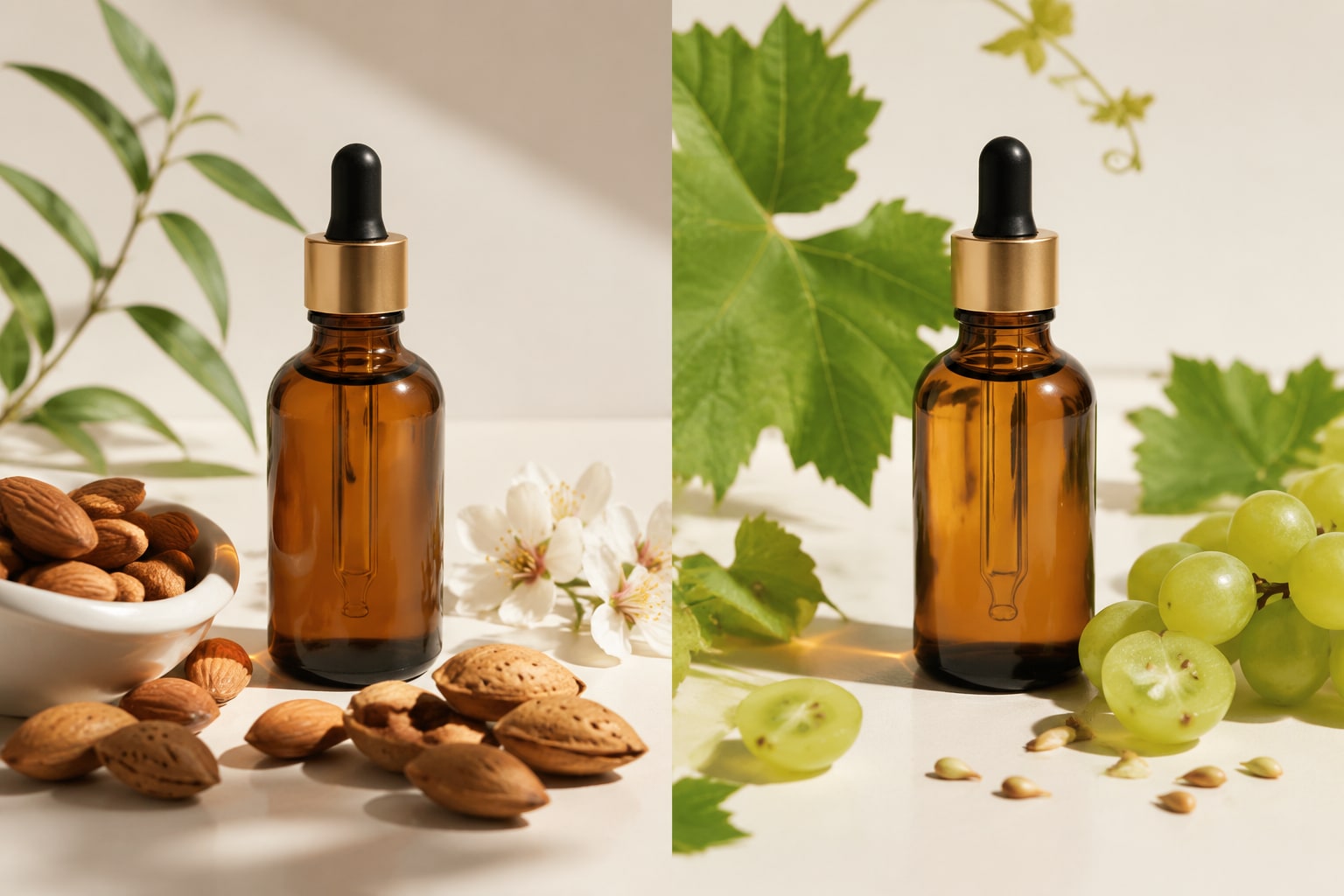
Almond vs Grapeseed Oil for Hair: Which Is Lighter?
Almond vs grapeseed for hair: which is lighter, which softens dry ends, and how to choose for fine or humid-weather routines.
Compare castor and argan oil for texture, shine, buildup risk, and routine fit with side-by-side tables and choose-if guidance.
Castor oil and argan oil sit at opposite ends of the weight spectrum for most hair routines. Castor is thick, occlusive, and built for sealing dry ends and pre-shampoo protection. Argan is smoother, lighter, and built for daily frizz control and finishing shine. Neither replaces the other—they solve different friction points.
This comparison uses practical criteria: texture, spread, wash effort, scalp tolerance, and styling goals. Read the tables first, then use the choose-if sections to pick a starting oil for a 14-day test.
| Factor | Castor oil | Argan oil |
|---|---|---|
| Weight | Heavy | Light to medium |
| Texture | Thick, slow spread | Silky, fast spread |
| Primary use | Pre-shampoo, end seal | Damp seal, dry finish |
| Shine type | Deep, glossy | Polished, natural |
| Buildup risk | High if overused leave-in | Moderate if roots saturated |
| Wash effort | Often needs emulsifying shampoo | Usually single wash |
| Fine hair fit | Poor as daily leave-in | Good in drops |
| Curly/thick fit | Strong on dry ends | Good for refresh smoothing |
| Scalp use | Diluted, occasional | Light, occasional |
Castor clings. A small amount persists through multiple days if not washed out, which helps porous ends but overwhelms fine roots quickly. Warm it between palms and apply by pressing—rubbing aggressively creates tangles.
Argan glides. It distributes in drops across mids and ends without the same sticky drag. That makes it easier for beginners and for routines that need same-day polish before events.
If your hair collapses by afternoon, argan at micro-dose is the safer default. If ends still feel rough after argan, add castor as a targeted pre-shampoo—not as a replacement for every argan session.
Both oils seal; they do not hydrate alone. Castor creates a stronger occlusive layer that slows water loss from conditioned hair. Argan creates a lighter film that smooths cuticles for cosmetic frizz control.
| Scenario | Better fit |
|---|---|
| High-porosity ends after bleaching | Castor pre-shampoo + argan damp seal |
| Daily humidity frizz on medium hair | Argan finish |
| Overnight pre-wash on thick hair | Castor or castor blend |
| Refresh day on curls | Argan drops, castor only on driest tips |
Castor users often need shampoo-on-dry-hair first, then rinse, then possibly a second lather. Skipping that step leaves waxy residue that feels like “bad argan” when the product was castor all along.
Argan rinses more easily from leave-in doses. Buildup still happens if you stack argan under silicone serums and creams without clarifying occasionally.
| Wash habit | Easier oil |
|---|---|
| One quick shampoo | Argan |
| Double cleanse weekly already | Either; castor fits naturally |
| Wash once weekly | Argan leave-in; castor pre-shampoo only before wash |
Oily scalps: avoid castor on roots except diluted, same-day wash sessions. Argan in two to three drops along parts can work occasionally but is not required.
Dry scalps: diluted castor massage once weekly maximum for some users; argan rarely needed on scalp.
Length strategy that works for many textures: argan on mids for daily wear, castor on last two inches before wash day.
You have conflicting zones: oily roots, rough ends. Use argan sparingly on mids for styling days and castor as a pre-shampoo on ends the night before wash. Do not double full doses the same day on fine hair.
| Track | Castor signal | Argan signal |
|---|---|---|
| Softness day 3 | Strong on ends | Moderate |
| Root volume | Often reduced if overapplied | Usually preserved |
| Frizz halo | Moderate | Strong |
| Removal time | Longer | Shorter |
Castor oil vs argan oil is a weight and timing choice, not a loyalty contest. Castor wins for durable end sealing and pre-shampoo support on dry or textured hair. Argan wins for daily frizz, shine, and fine-to-medium wearability with easier rinse.
Start with the oil that matches your biggest weekly frustration, run a disciplined 14-day test, and combine by zone only if a single oil cannot cover both root volume and end dryness. Consistency beats switching bottles every wash day.
See best castor oil for thick hair and best argan oil for fine hair. Read the argan oil guide and castor oil guide.
Choose castor for heavy sealing and overnight treatments; choose argan for lighter daily shine and frizz polish.
Argan in drop doses. Castor is easy to overdo on fine crowns.
Either can work. Castor for deep seal; argan under richer layers or as a finishing oil.
Yes: argan as a light leave-in, castor as an occasional pre-wash on ends.
Argan usually feels lighter at leave-in doses.
Use the castor and argan guides for your hair type.
Almond vs grapeseed for hair: which is lighter, which softens dry ends, and how to choose for fine or humid-weather routines.
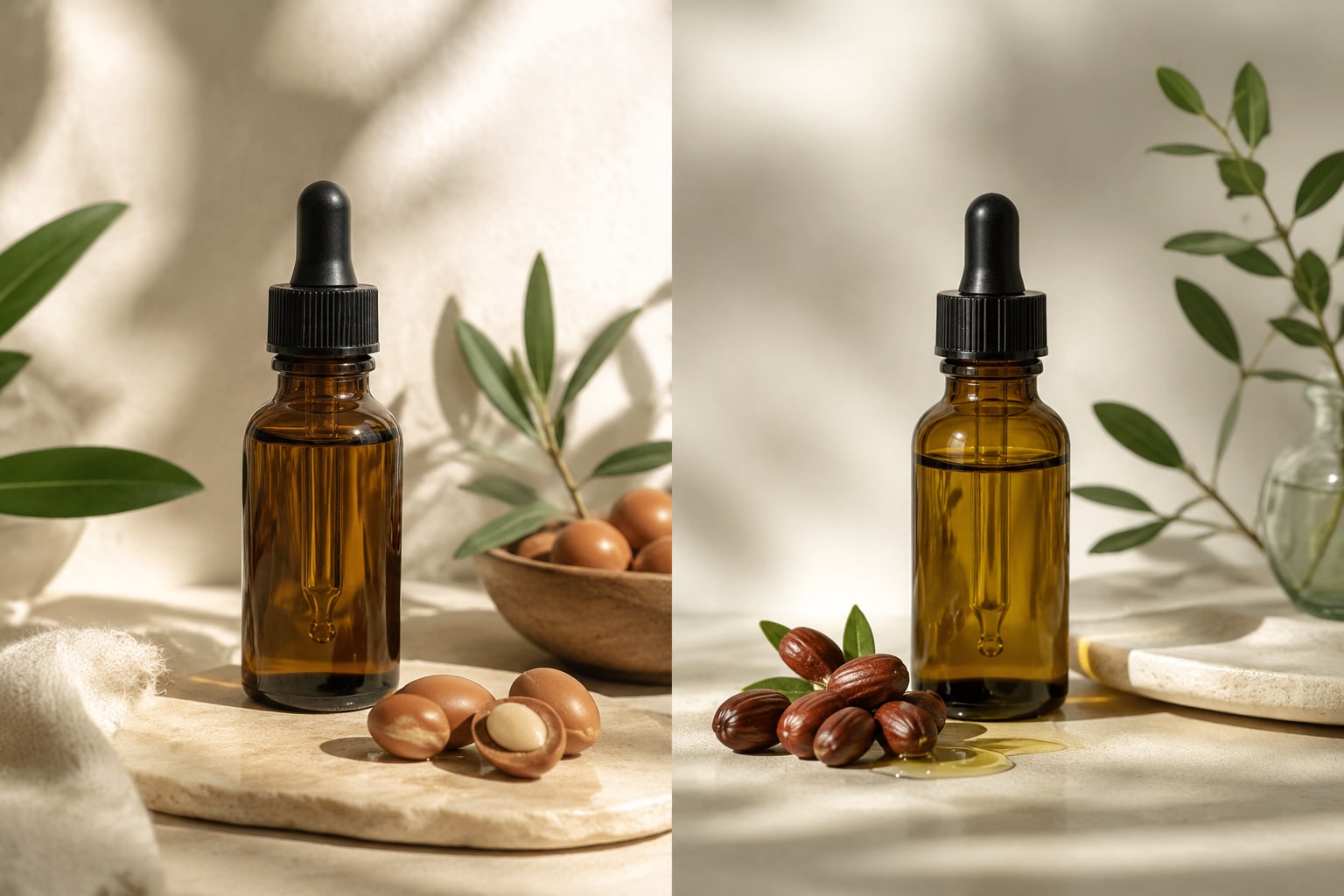
Argan and jojoba compared for shine, frizz control, scalp tolerance, and daily wearability with tables and choose-if guidance.
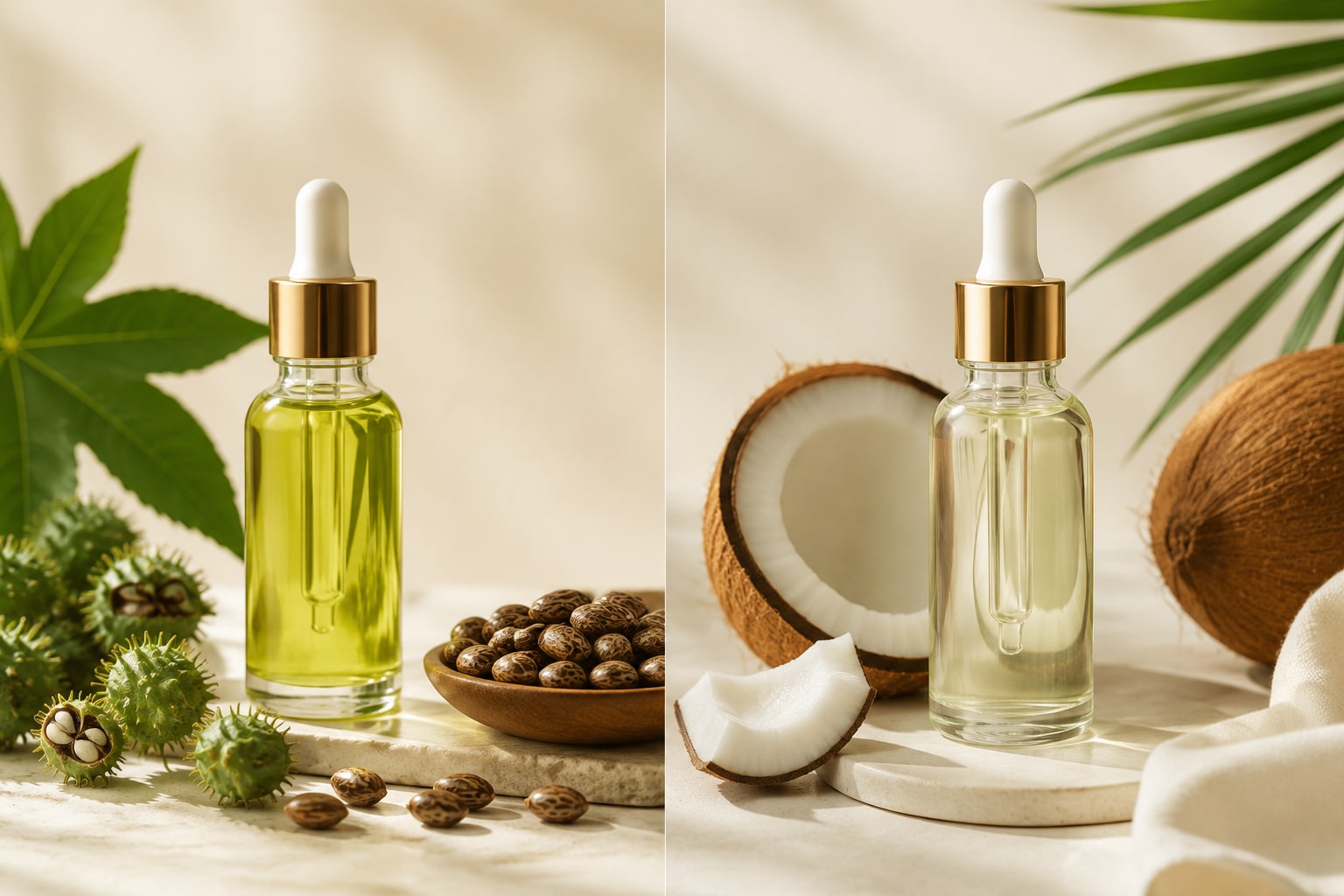
See how castor and coconut oils differ in slip, sealing power, protein sensitivity, and removal effort, with comparison tables.