Comparisons
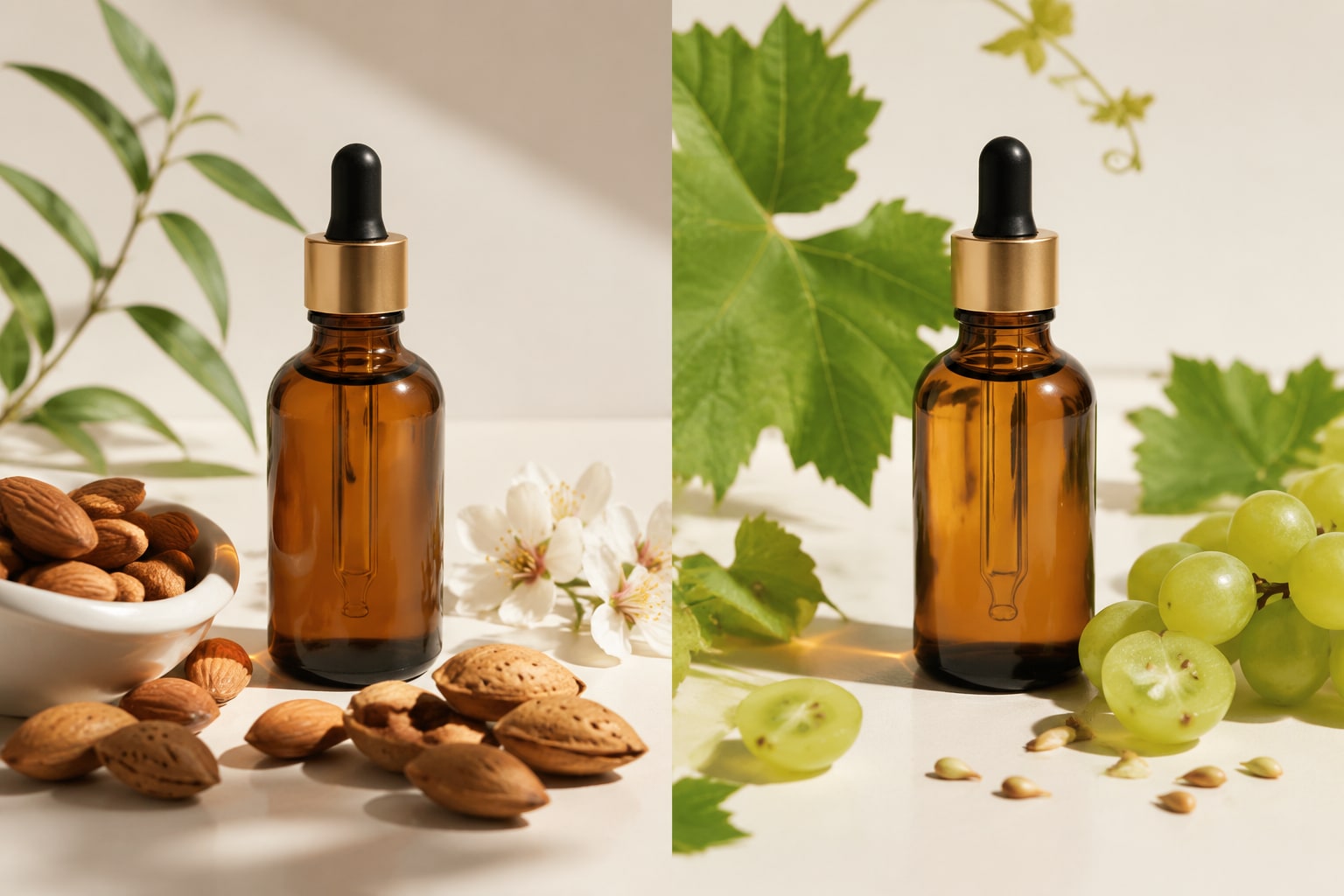
Almond vs Grapeseed Oil for Hair: Which Is Lighter?
Almond vs grapeseed for hair: which is lighter, which softens dry ends, and how to choose for fine or humid-weather routines.
Head-to-head look at coconut and jojoba for penetration, daily wear, scalp tolerance, and wash-day impact with choose-if tables.
Coconut oil and jojoba oil represent opposite routine philosophies. Coconut is a rich pre-shampoo protector that can penetrate and influence how hair feels during washing. Jojoba is a lightweight, sebum-like finisher that suits frequent micro-doses and oily-prone scalps. Many routines need jojoba between wash days and coconut before wash day—not one oil for every slot.
| Factor | Coconut oil | Jojoba oil |
|---|---|---|
| Weight | Heavy | Light |
| Chemistry | Triglyceride, lauric-rich | Wax ester, sebum-like |
| Primary role | Pre-shampoo | Leave-in seal, scalp balance |
| Penetration | Higher for many hair types | Mostly surface |
| Fine hair | Risk of weigh-down | Usually tolerates drops |
| Oily scalp | Avoid root leave-in | Often best carrier |
| Solid in cold | Frequently yes | No |
| Protein sensitivity | Some users stiff | Rare stiffness reports |
| Wash effort after pre-shampoo | Moderate to high | Low for leave-in doses |
Jojoba wins daily wear for most textures. Two to four drops on damp or dry ends add slip without forcing an early wash. It rinses cleanly and preserves root volume when kept off the scalp or used in tiny scalp doses.
Coconut wins treatment day. A sectioned pre-shampoo session supports detangling and pre-wash protection in ways jojoba does not replicate at the same dose.
| Routine slot | Better pick |
|---|---|
| Monday wash prep Sunday night | Coconut |
| Wednesday frizz touch-up | Jojoba |
| Scalp massage before same-day wash | Jojoba or jojoba blend |
| Overnight mask on thick hair | Coconut |
Oily scalps often reject coconut leave-in at roots but may tolerate jojoba in small amounts along part lines before washing. Coconut scalp saturation increases grease by day two for many washers.
Dry scalps may enjoy occasional coconut pre-shampoo on lengths while using jojoba on scalp in dilution. Neither oil treats medical scalp conditions.
High-porosity hair frequently loves coconut pre-shampoo. Low-porosity hair may feel product sits on top with either oil but usually tolerates jojoba leave-in better than coconut leave-in.
Protein-sensitive users: watch coconut frequency; jojoba is often the safer frequent option.
Coconut buildup feels stiff or dull; jojoba buildup feels greasy but rinses faster from light doses. Clarify monthly if you layer either with silicone-heavy stylers.
| Day | Oil |
|---|---|
| Night before wash | Coconut pre-shampoo on lengths |
| Wash day | Cleanse, condition, 3 drops jojoba seal |
| Mid-week | 1 drop jojoba on flyaways |
Hold placement constant (mids and ends). Week one: coconut pre-shampoo once + jojoba leave-in on wash day. Week two: jojoba only at same leave-in dose, no coconut—compare wash-day roughness vs mid-week frizz. This reveals which friction point matters more for you.
| Hair type | Coconut role | Jojoba role |
|---|---|---|
| Fine straight | Monthly pre-shampoo on ends | 1 to 2 drops leave-in |
| Wavy medium | Weekly pre-shampoo optional | 2 to 4 drops leave-in |
| Thick straight | Weekly pre-shampoo sectioned | Mid-week end touch-up |
| Curly/coily | 1 to 2 pre-shampoo sessions weekly | Refresh-day micro-dose |
| Color-treated | Pre-shampoo before long wash | Damp seal after color-safe conditioner |
| Oily scalp | Lengths only pre-shampoo | Scalp massage carrier, same-day wash |
This table is a starting map, not a rule. Your wash schedule still overrides default frequency.
Switching coconut to a leave-in role because jojoba “did nothing” in one hour often causes buildup on fine hair. Using jojoba as an overnight mask instead of coconut skips the penetration benefit thick hair gets from longer coconut contact. Applying either to bone-dry hair without conditioner underneath can trap dryness instead of improving feel.
Fix the method before declaring one oil superior. Coconut should usually enter as pre-shampoo; jojoba should usually enter as measured leave-in or diluted scalp work.
Coconut oil vs jojoba oil is timing, not rank. Coconut is your heavier pre-wash tool; jojoba is your lighter between-wash tool. Fine and oily profiles lean jojoba; thick dry profiles lean coconut for weekly treatment.
Test each in the role it fits best rather than forcing both into the same application slot. The winning routine often includes both—on different days.
See best coconut oil for curly hair and best jojoba oil for oily scalp. Timing: how often to oil hair.
Jojoba is typically lighter as a leave-in. Coconut is often better as a timed pre-wash.
Coconut is a common pre-wash; jojoba is a common light seal. Many curl routines use both roles.
Jojoba leave-in doses are usually safer than coconut leave-in.
Some high-protein-feel or low-porosity users dislike coconut leave-in. Switch to pre-wash or another oil if hair feels stiff.
Yes — coconut pre-shampoo once, jojoba micro-doses on ends between washes.
Open coconut and jojoba guides for your hair type.
Almond vs grapeseed for hair: which is lighter, which softens dry ends, and how to choose for fine or humid-weather routines.
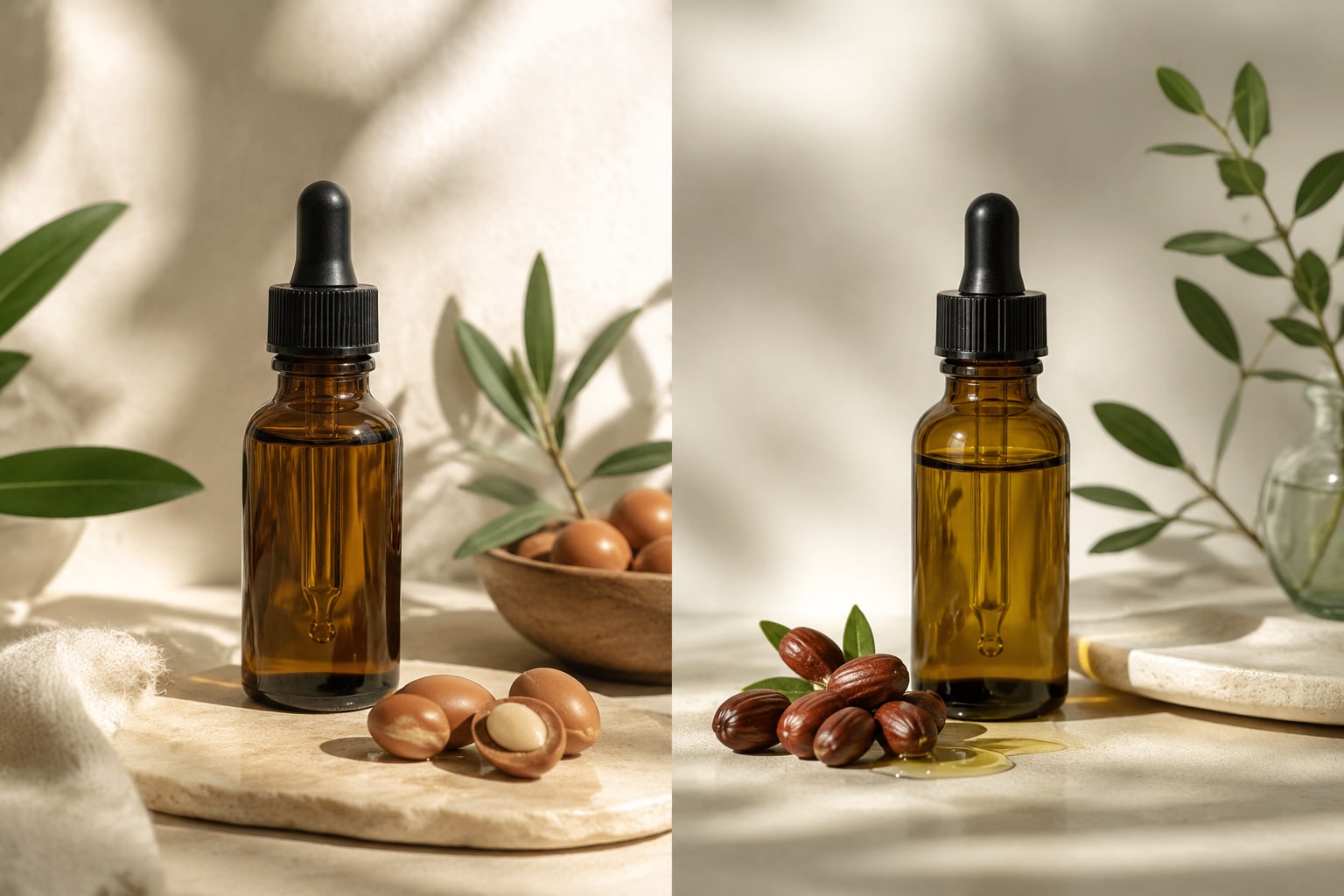
Argan and jojoba compared for shine, frizz control, scalp tolerance, and daily wearability with tables and choose-if guidance.
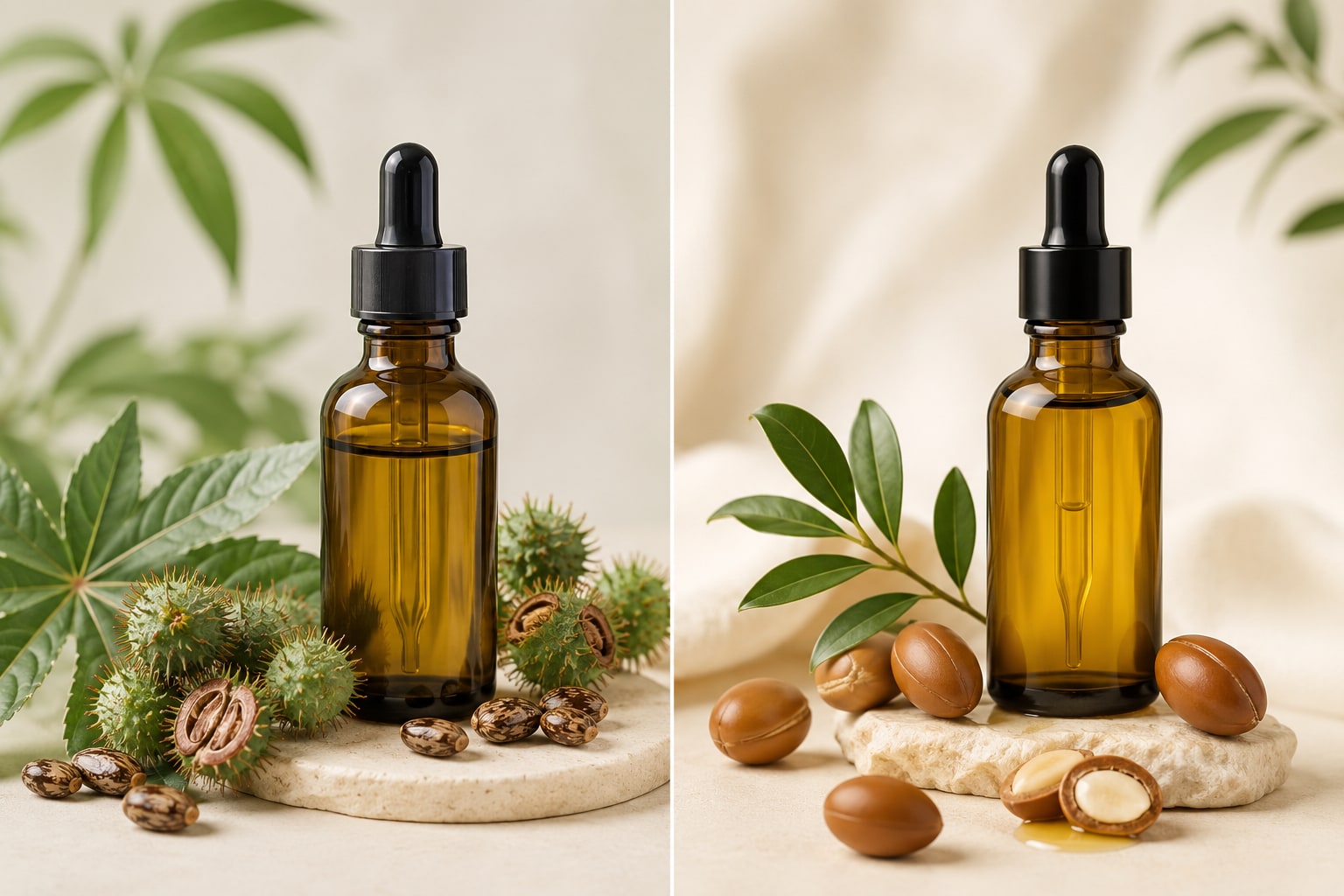
Compare castor and argan oil for texture, shine, buildup risk, and routine fit with side-by-side tables and choose-if guidance.