How-To
How Much Hair Oil Should You Use?
A practical dosing guide for fine, medium, and thick hair with measurement tables, oil-type ranges, and a quick decision checklist.
Learn how often to oil your hair by texture, wash schedule, and scalp response, with frequency tables and a practical decision checklist.
There is no universal answer to how often you should oil your hair. A frequency that keeps thick, dry curls soft can flatten fine hair by midweek. A schedule that works in winter may feel heavy in humid summer. The right cadence depends on your wash rhythm, oil weight, placement, and how quickly your scalp and strands recover between sessions.
This guide replaces vague rules like “oil twice a week” with a planning framework. You will find frequency tables by hair type, dosage-linked examples, and a checklist to adjust when buildup or dryness appears. The goal is a sustainable rhythm you can maintain for months—not a aggressive boot camp that forces extra wash days.
Before counting days on a calendar, understand what drives oil scheduling:
| Variable | Increases oil frequency tolerance | Decreases tolerance |
|---|---|---|
| Wash schedule | Washing every 2 to 3 days | Washing once weekly with heavy leave-in |
| Oil type | Grapeseed, jojoba | Castor, undiluted coconut |
| Placement | Ends only | Full scalp saturation |
| Climate | Dry, cold air | Humid, hot air |
These ranges assume measured doses from our how much hair oil guide, not full-bottle application.
| Hair type | Pre-shampoo frequency | Leave-in frequency | Notes |
|---|---|---|---|
| Fine | Once every 7 to 14 days | 1 to 2 times weekly, ends only | Skip if roots flatten |
| Medium straight/wavy | Once weekly | 2 to 3 times weekly on ends | Reduce in humidity |
| Thick | 1 to 2 times weekly | 2 to 4 times weekly on mids/ends | Section for even coverage |
| Curly/coily | 1 to 2 times weekly | 2 to 5 times weekly on mids/ends | Refresh days use micro-doses |
| Dry/damaged | 2 times weekly | 3 to 4 times weekly on porous zones | Pair with conditioner |
| Oily scalp | Once weekly on lengths only | 1 to 2 times weekly, ends only | Same-day wash after scalp oil |
| Color-treated | Once weekly pre-shampoo | 2 to 3 times weekly on mids/ends | Avoid extra root washing |
These are starting ranges. Your scalp response overrides any table.
| You wash… | Suggested oil rhythm |
|---|---|
| Every day or every other day | Light leave-in on ends 2 to 3 times weekly; pre-shampoo optional every 10 to 14 days |
| Twice weekly | One pre-shampoo before longer wash; one damp seal or dry finish mid-cycle |
| Once weekly | One pre-shampoo or overnight treatment; one micro refresh on day 4 if ends are rough |
| Every 10 to 14 days | One pre-shampoo before wash; avoid daily leave-in unless doses are tiny |
The rule of thumb: every full-head or root oil session should connect to a wash within 24 to 48 hours unless you are using sub-drop finishing amounts on dry ends.
Ask these questions at the end of each week:
| Question | If yes… |
|---|---|
| Do ends still feel rough by day two? | Add one end touch-up or one pre-shampoo session |
| Do roots look greasy before wash day? | Reduce root contact; extend days between scalp oil |
| Does hair feel coated or stiff? | Reduce dose first; if persists, reduce frequency |
| Are you clarifying more than monthly? | Cut leave-in frequency or switch to lighter oil |
| Is detangling easier and breakage lower? | Hold current frequency |
Change one variable at a time. Adjust dose for one week before changing frequency.
| Oil | Typical spacing for leave-in | Typical pre-shampoo spacing |
|---|---|---|
| Grapeseed | Every 2 to 3 days on ends | Weekly optional |
| Jojoba | Every 2 to 3 days on ends | Every 7 to 10 days |
| Argan | Every 2 to 4 days on mids/ends | Weekly |
| Almond | Every 3 to 5 days on ends | Every 7 to 10 days |
| Coconut | Avoid daily leave-in; 1 to 2 times weekly max on ends | 1 to 2 times weekly |
| Castor | Ends only, every 3 to 5 days | 1 to 2 times weekly |
| Rosemary/tea tree (diluted scalp) | Not leave-in; scalp session every 7 to 10 days | Same-day wash required |
Essential oils require dilution. Scalp sessions with aromatic oils should not become daily habits without professional guidance.
| Day | Oil action |
|---|---|
| Mon (wash) | Damp seal: 2 drops on ends |
| Wed | Optional: 1 drop dry flyaway touch-up |
| Fri (wash) | No oil or 1 drop on damp ends only |
| Sun | Rest |
| Day | Oil action |
|---|---|
| Mon (wash) | Damp seal after leave-in |
| Wed | Refresh: water mist + 1 drop on rough sections |
| Fri | Pre-shampoo coconut on lengths, 60 min |
| Sat (wash) | Cleanse; light seal on damp ends |
| Day | Oil action |
|---|---|
| Sun (wash) | Full routine with damp seal |
| Wed | End touch-up: 2 drops castor on dry tips |
| Fri | Pre-shampoo sectioned oil, overnight |
| Sun (wash) | Shampoo dry oiled hair first, condition, seal |
Humid seasons: Reduce leave-in frequency by one session per week. Humidity adds surface moisture; excess oil creates limp, sticky texture.
Dry winter air: Add one end touch-up mid-week if brittleness returns between washes.
Heavy exercise or sweat: Favor pre-shampoo over leave-in on roots. Salt and sweat plus oil can accelerate scalp discomfort.
Heat styling weeks: One damp seal before blow-dry is enough for many textures; do not stack oil under multiple silicone serums without monitoring buildup.
Reduce frequency by one session for two weeks before switching products.
Add one micro-dose end application or one pre-shampoo session—not both at once.
How often you should oil your hair is a scheduling question tied to wash rhythm, oil weight, and placement—not a magic number from a trend post. Fine and oily-prone hair usually needs fewer, lighter sessions focused on ends. Thick, curly, and dry hair often tolerates more frequent contact when doses stay measured.
Use the hair-type table as your starting point, connect every root treatment to an imminent wash, and adjust using the weekly checklist when coated texture or persistent dryness appears. Consistency over eight weeks tells you more than any single overnight mask—and it keeps oil working with your routine instead of against it.
Pair cadence with dose in how much hair oil to use and how to apply hair oil. Product path: best grapeseed oil for oily scalp or best argan oil for dry damaged hair.
Most people do well with one to three oil sessions weekly, matched to wash frequency and oil weight.
Only with very light leave-in doses on ends. Daily rich scalp oiling usually causes buildup.
One to two light end doses per week is a common starting point. Skip roots.
Two to three sessions weekly, including optional pre-shampoo treatments, often fit better.
Yes for most textures. Overnight treatments are richer; do not stack them every night.
Move oil to lengths only, shorten contact time, and wash on your normal cadence.
A practical dosing guide for fine, medium, and thick hair with measurement tables, oil-type ranges, and a quick decision checklist.
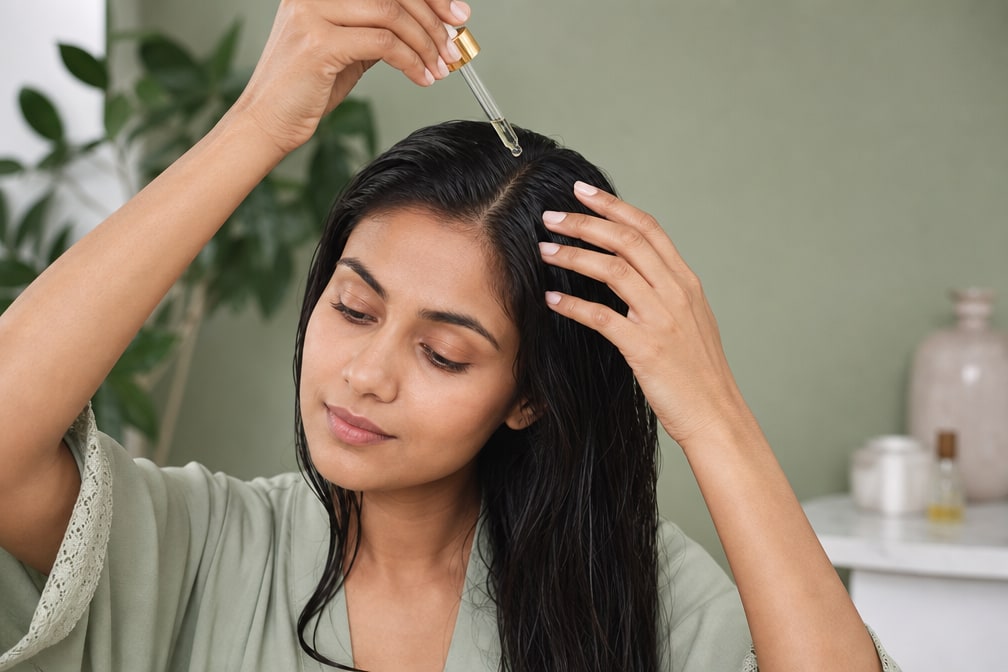
Apply hair oil with dose tables, timing checklist, and sectioning steps so fine, curly, and thick hair stay soft—not greasy.

Learn the cosmetic benefits of castor oil for hair, from moisture sealing to smoother ends, plus practical routines, doses, and what to expect.