How-To
How Much Hair Oil Should You Use?
A practical dosing guide for fine, medium, and thick hair with measurement tables, oil-type ranges, and a quick decision checklist.
Overnight hair oiling: when it helps, dose by hair type, bedding prep, and morning wash cleanup that removes residue.
Overnight oil treatments can soften rough hair, support detangling on wash day, and give rich oils time to work without rushing a timer before bed. They can also stain pillowcases, flatten roots, and leave residue that demands double cleansing if done carelessly. The method works best when you match oil weight to hair type, protect bedding, and plan a thorough wash the next morning.
This guide covers when overnight oiling is worth the effort, how much product to use, prep steps, and a cleanup protocol that removes castor and coconut without frustration.
| Good fit | Poor fit |
|---|---|
| Thick, curly, or dry hair with porous ends | Fine hair that flattens easily |
| Pre-shampoo night before a planned wash | Oily scalp needing fresh roots tomorrow |
| Rich oils (coconut, castor) on lengths | Daily habit on full head including roots |
| Low-manipulation weeks or protective prep | Active scalp irritation or open wounds |
Overnight treatment is a pre-wash strategy, not a leave-in replacement. You should always cleanse the next morning.
Apply to dry hair, sectioned, from mid-length through ends.
| Hair type | Coconut or castor dose | Lighter oil blend |
|---|---|---|
| Fine | 1/2 to 1 tsp, ends only | Not recommended overnight |
| Medium | 1 to 2 tsp | 1 tsp carrier + few drops essential |
| Thick | 2 to 4 tsp | 1 to 2 tbsp carrier blend |
| Curly/coily, long | 1 to 2 tbsp sectioned | 2 tbsp carrier max |
Less is safer on first attempt. You can increase next month if wash removal stays easy.
Create four to six sections. Clip each away except the one you are working on. Even distribution prevents a greasy top layer and dry underside.
Melt coconut if solid. Warm castor or blends between palms. Press into each section from mid-length down. Avoid scalp unless you are doing a deliberate same-morning scalp wash with dilution.
Use fingers or a wide-tooth comb on oiled sections if knots are present. Do not rip through dry hair before oiling.
Do not sleep with dripping hair. Blot excess with a tissue if needed.
| Oil | Overnight behavior | Cleanup tip |
|---|---|---|
| Coconut | Solidifies in cool rooms; warm before applying | Shampoo dry hair first; may need two passes |
| Castor | Very clingy; small doses only | Emulsify patiently; avoid stacking with heavy stylers before wash |
| Almond | Moderate; good for medium hair | Standard double shampoo if over-applied |
| Jojoba | Light; may not justify overnight mess | Prefer 1-hour pre-shampoo instead |
| Essential blends | Scalp only, diluted | Wash morning; ventilate room |
Weekly thick-hair routine: Friday night, 2 tsp coconut sectioned on lengths. Saturday morning double shampoo + deep conditioner.
Biweekly fine-hair ends: Sunday night, 1/2 tsp almond on last three inches only. Monday wash with single shampoo focus on ends.
Curly pre-wash: Night before wash day, 1 tbsp coconut on four sections under bonnet. Morning: shampoo dry, condition, style.
| Problem | Likely cause | Fix |
|---|---|---|
| Pillow stains | Excess oil, no bonnet | Reduce dose 30 percent; add barrier |
| Flat roots morning | Oil on scalp/roots | Ends only next time |
| Still greasy after wash | Insufficient emulsifying | Shampoo dry before water; second lather |
| Itchy scalp | Undiluted essential or too much castor on scalp | Dilute; shorten contact; same-day wash only |
| No softness benefit | Too little product or wrong oil | Slightly increase on lengths only |
Overnight oil is cosmetic care, not medical treatment. Stop if scalp burning, rash, or unusual shedding appears and simplify your routine. Persistent scalp changes deserve professional evaluation.
Keep essential oils away from eyes and mucous membranes. Never ingest hair oils.
Overnight oil treatments work when they are deliberate pre-wash sessions: measured doses on lengths, protected bedding, and a committed wash the next morning with proper emulsifying technique. Thick, dry, and curly hair gains the most; fine and oily-prone hair should use minimal end-only doses or skip overnight contact entirely.
Use the checklist to confirm tomorrow is wash day, follow the dose table for your density, and adjust based on how cleanly hair rinses—not on how shiny it looks before you sleep. Done right, overnight oiling reduces wash-day stress; done carelessly, it costs you an extra clarifying day.
See pre-shampoo vs leave-in oil and best castor oil for dry damaged hair. Application basics: how to apply hair oil.
Yes for many carrier oils on lengths, especially as a pre-shampoo treatment. Protect pillows and avoid essential-oil neat use on scalp.
Castor, coconut, and almond are common overnight sealers. Keep doses moderate and shampoo thoroughly in the morning.
Only if you tolerate oils on scalp and plan to wash soon. Many people keep overnight oil on mid-lengths and ends.
Helpful for richer treatments to reduce transfer. Not required for a light end seal.
It can. Use less than a leave-in day dose and clarify if hair feels coated after a few sessions.
Not automatically. Consistency and correct dose beat contact time alone.
A practical dosing guide for fine, medium, and thick hair with measurement tables, oil-type ranges, and a quick decision checklist.

Learn how often to oil your hair by texture, wash schedule, and scalp response, with frequency tables and a practical decision checklist.
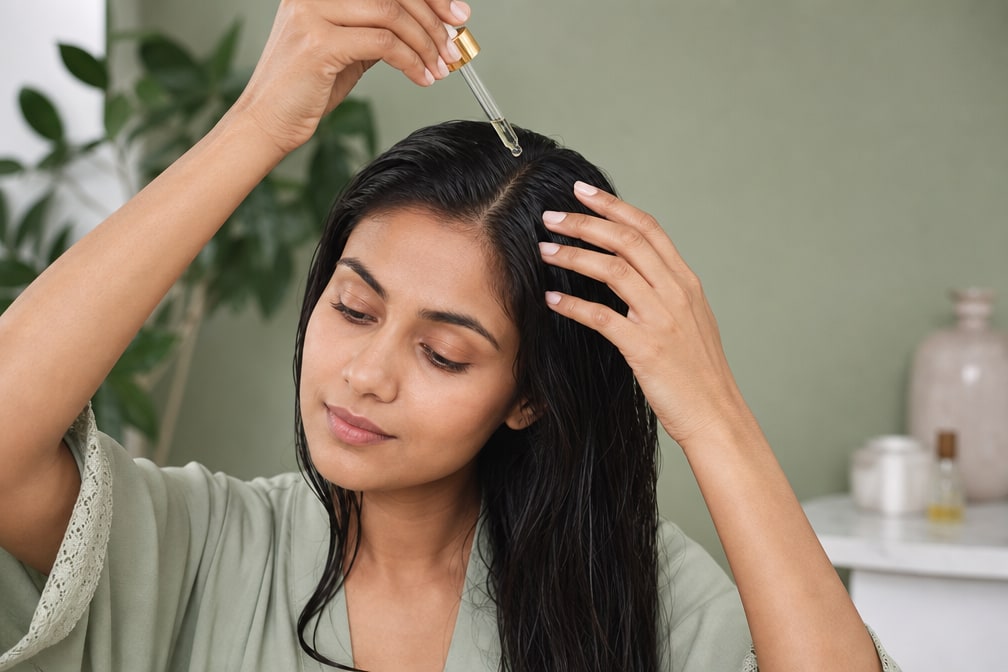
Apply hair oil with dose tables, timing checklist, and sectioning steps so fine, curly, and thick hair stay soft—not greasy.