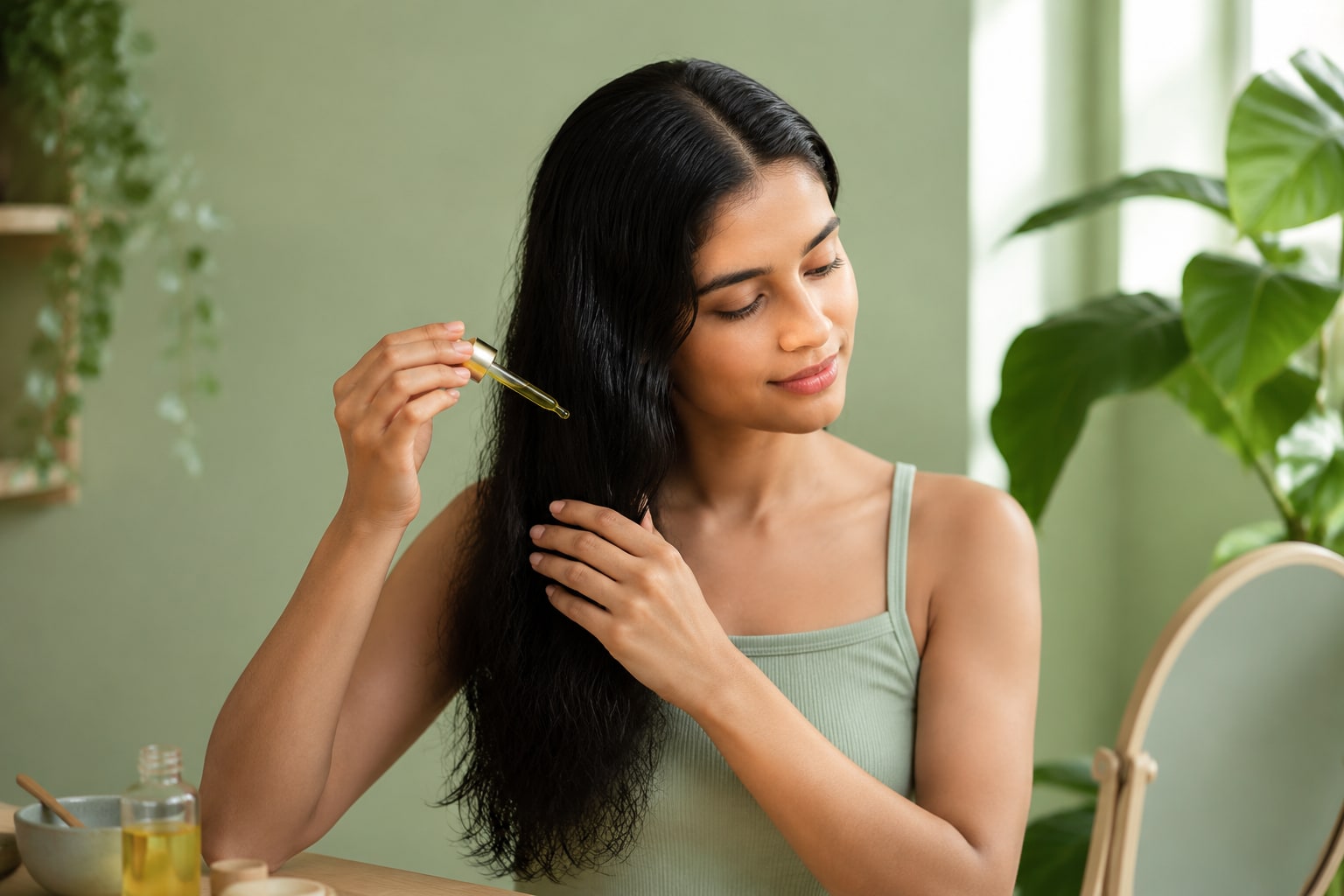
How-To
How Often Should You Oil Your Hair?
Learn how often to oil your hair by texture, wash schedule, and scalp response, with frequency tables and a practical decision checklist.
A practical dosing guide for fine, medium, and thick hair with measurement tables, oil-type ranges, and a quick decision checklist.
Using too much hair oil is the fastest way to turn a helpful product into a buildup problem. Using too little leaves ends rough and flyaways untouched. Dosing is not about instinct or copying a social media pour—it is about matching oil weight to hair density, length, porosity, and the timing method you chose for that session.
This guide gives starting ranges in drops and teaspoons, tables by hair type and oil family, and real-world examples you can copy on your next wash day. Start low, assess after hair dries, and add only where texture still feels rough.
Two people with the same bottle can get opposite results. The difference is almost always quantity and placement, not ingredient mystique. Heavy oils like castor and coconut cross from helpful to coated in a single overpour. Light oils like grapeseed forgive small errors but disappear too quickly if under-applied on thick hair.
Dose also interacts with timing. Pre-shampoo methods tolerate more product because you remove it the same day. Leave-in methods require fractions of a teaspoon—or pure drops—on fine hair.
Before measuring, answer:
| Question | Dose direction |
|---|---|
| Is this pre-shampoo or leave-in? | Pre-shampoo: higher range. Leave-in: lowest range. |
| Fine, medium, or thick density? | Fine: drops. Medium: drops to 1 tsp. Thick: tsp to tbsp. |
| Roots or ends? | Roots: 3 to 5 drops diluted max. Ends: most of total dose. |
| Which oil? | Rich oils: bottom of range. Light oils: mid range. |
| Humid or dry climate? | Humid: reduce 20 to 30 percent. Dry: hold or add half-drop touch-up. |
Applies to damp seal or dry finish methods on mids and ends.
| Density | Light oils (grapeseed, jojoba) | Medium oils (argan, almond) | Rich oils (castor, coconut) |
|---|---|---|---|
| Fine, chin length | 1 to 2 drops | 1 drop | Avoid leave-in or 1/2 drop on tips |
| Fine, shoulder+ | 2 to 3 drops | 1 to 2 drops | 1 drop on tips only |
| Medium | 3 to 5 drops | 2 to 4 drops | 1 to 2 drops on ends |
| Thick | 5 to 8 drops | 4 to 6 drops | 2 to 4 drops on ends |
| Curly/coily, long | 6 to 10 drops sectioned | 5 to 8 drops sectioned | 3 to 6 drops on driest zones |
One drop equals roughly 0.05 ml from a standard dropper. When in doubt, use half the table value and reassess.
Apply to dry hair from mid-length through ends unless doing a targeted end mask.
| Length | Light/medium oils | Rich oils (coconut, castor) |
|---|---|---|
| Ear to chin | 1/2 to 1 tsp | 1/2 to 1 tsp |
| Shoulder | 1 to 2 tsp | 1 to 2 tsp |
| Mid-back | 2 to 3 tsp | 2 to 4 tsp |
| Waist or longer | 3 to 4 tsp sectioned | 1 to 2 tbsp sectioned |
Section hair before measuring. Spread evenly rather than concentrating on the top layer.
Never apply undiluted essential oils directly to scalp. For carrier-based scalp work:
| Hair type | Carrier amount | Essential oil (if used) | Castor in blend |
|---|---|---|---|
| Fine | 1 tbsp jojoba or grapeseed | 2 to 3 drops rosemary/tea tree | 1/4 tsp max in blend |
| Medium | 1 to 2 tbsp carrier | 3 to 5 drops essential | 1/2 tsp in blend |
| Thick | 2 tbsp carrier | 5 drops essential max | 1 tsp in blend |
Massage for two to three minutes. Wash same day.
Fine hair, daily frizz: One drop argan between palms, smooth crown halo only. Total: 1 drop.
Medium wavy, post-wash seal: Three drops jojoba on damp ends after leave-in. Total: 3 drops.
Thick straight, weekly pre-shampoo: Two teaspoons almond oil sectioned through mids and ends for 45 minutes. Wash with shampoo-on-dry-hair method.
Curly, overnight pre-wash: One tablespoon melted coconut distributed across four sections. Bonnet overnight. Emulsify shampoo twice if needed.
Oily scalp, dry ends: Zero on roots. Two drops grapeseed on dry tips mid-week.
Castor on damaged tips: Three drops pressed into last two inches only, twice weekly pre-shampoo.
Always warm product between palms before applying so it spreads instead of patching.
Wait until hair is fully dry before adding more product the same day.
| What you feel/see | Adjustment |
|---|---|
| Silky with movement | Hold dose |
| Coated, sticky, or limp | Cut dose 30 to 50 percent next time |
| Still rough at ends only | Add half-drop to rough patch only |
| Greasy roots | Remove root application entirely |
| Good day one, rough day three | Add mid-week micro-dose, do not double wash-day dose |
| Layer | Suggested oil dose change |
|---|---|
| Leave-in conditioner underneath | Use 20 percent less oil |
| Silicone serum on top | Use 30 to 40 percent less oil |
| Styling cream + oil | Either thin cream or thin oil—not both full strength |
| Pre-shampoo only day | Full pre-shampoo table; zero leave-in same day |
How much hair oil you should use depends on density, length, oil weight, and whether the product washes out the same day. Fine hair lives in drops. Thick and curly hair needs sectioned teaspoons for pre-shampoo but still uses drops for daily sealing. Castor and coconut belong at the bottom of leave-in ranges and the middle of pre-shampoo ranges.
Start below the table recommendation, evaluate on dry hair, and increase only where roughness remains. Measured dosing saves wash days, preserves volume, and turns oil into a repeatable tool instead of a guessing game.
Practice application in how to apply hair oil. Then open best jojoba oil for fine hair or best coconut oil for thick hair. See the best hair oils map.
Start with two to four drops on mid-lengths and ends. Increase only after a full week if ends still feel rough.
Yes. Fine or low-density hair often needs one to two drops, kept below the ears to protect lift.
Use sectioned doses so inner layers get coverage — a single drop on the canopy is usually not enough.
No. Extra oil usually causes buildup. Improve placement and consistency before increasing dose.
Most leave-in doses are every wash or every other day on ends. Rich overnight treatments are usually weekly.
Roots look oily, strands feel coated, or styling products pill. Cut dose and clarify gently if needed.
Learn how often to oil your hair by texture, wash schedule, and scalp response, with frequency tables and a practical decision checklist.
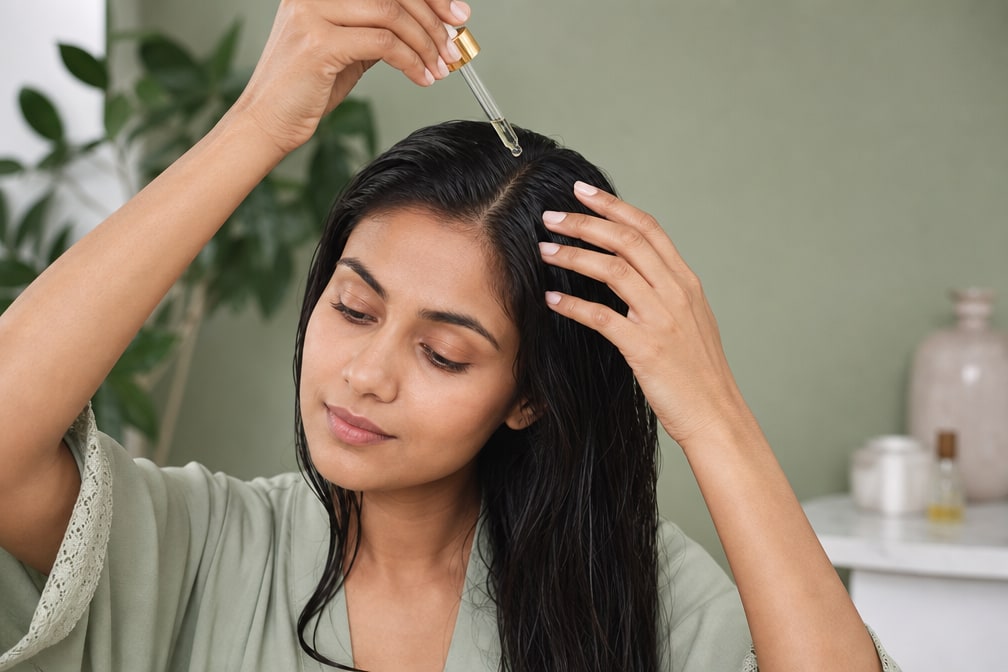
Apply hair oil with dose tables, timing checklist, and sectioning steps so fine, curly, and thick hair stay soft—not greasy.

Learn the cosmetic benefits of castor oil for hair, from moisture sealing to smoother ends, plus practical routines, doses, and what to expect.