How-To
How Much Hair Oil Should You Use?
A practical dosing guide for fine, medium, and thick hair with measurement tables, oil-type ranges, and a quick decision checklist.
Apply hair oil with dose tables, timing checklist, and sectioning steps so fine, curly, and thick hair stay soft—not greasy.
Applying hair oil looks simple until you end up with flat roots, coated strands, or an extra wash day you did not plan for. The difference between a good result and a frustrating one usually comes down to three variables: how much you use, where you place it, and when in your routine you apply it. This guide walks through a repeatable application method that works across hair types, with dose examples and a checklist to help you choose the right timing window.
Hair oil is a support product, not a replacement for cleansing or conditioning. Used well, it reduces friction, adds cosmetic shine, and helps hair hold moisture you already put in through water and conditioner. Used poorly, it creates buildup that makes every other product in your routine perform worse. The goal here is precision, not volume.
Choose a single primary goal for the next two weeks of testing:
| Goal | Best timing | Typical placement | Oils that fit |
|---|---|---|---|
| Frizz control | Damp post-wash or dry finish | Mids, ends, halo flyaways | Argan, jojoba, grapeseed |
| Softness and slip | Pre-shampoo or damp seal | Mid-lengths through ends | Coconut, almond, argan |
| Scalp comfort | Pre-wash massage only | Part lines, diluted | Jojoba, rosemary blend, tea tree blend |
| Breakage support | Pre-shampoo | Ends and porous sections | Castor, coconut, castor blend |
Chasing every outcome at once leads to over-application. One goal keeps your evaluation honest.
Answer these four questions before you open the bottle:
| If you answered… | Start with this method |
|---|---|
| Wash within 24 hours, dry ends | Pre-shampoo on mids and ends, 30 to 60 minutes |
| Wash today, just conditioned | Damp-hair seal, 1 to 4 drops on ends |
| Oily roots, rough ends | Roots bare; 1 to 2 drops on dry ends only |
| Scalp massage goal | Diluted oil on part lines, wash same day |
Divide hair into four to six manageable sections using clips. Sectioning prevents the common mistake of pouring oil on top and hoping it reaches the driest areas. Thick, curly, and long hair especially need this step.
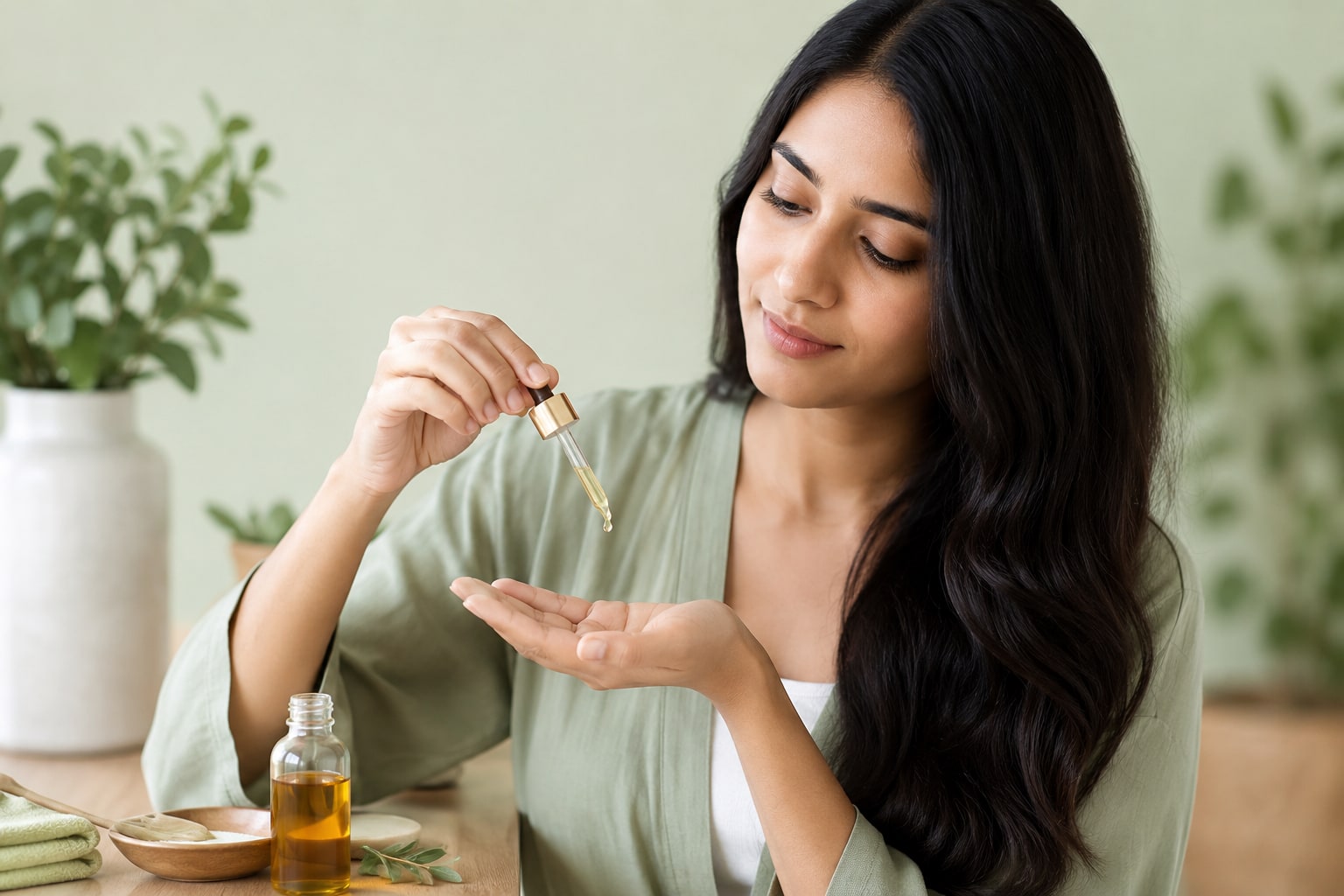
Pour or drop product into your palm first—never directly onto the scalp from the bottle. Rub palms together for five to ten seconds to warm the oil. Refer to the dose table below before proceeding.
| Hair density | Light oil (leave-in) | Rich oil (pre-shampoo) |
|---|---|---|
| Fine, short | 1 to 2 drops | 1/2 tsp on ends only |
| Fine, shoulder length | 2 to 3 drops | 1 tsp on mids and ends |
| Medium | 3 to 5 drops | 1 to 2 tsp on lengths |
| Thick or long | 5 to 8 drops | 2 to 4 tsp sectioned through lengths |
Start at the low end. You can always add a half-drop more to a rough patch after hair dries.
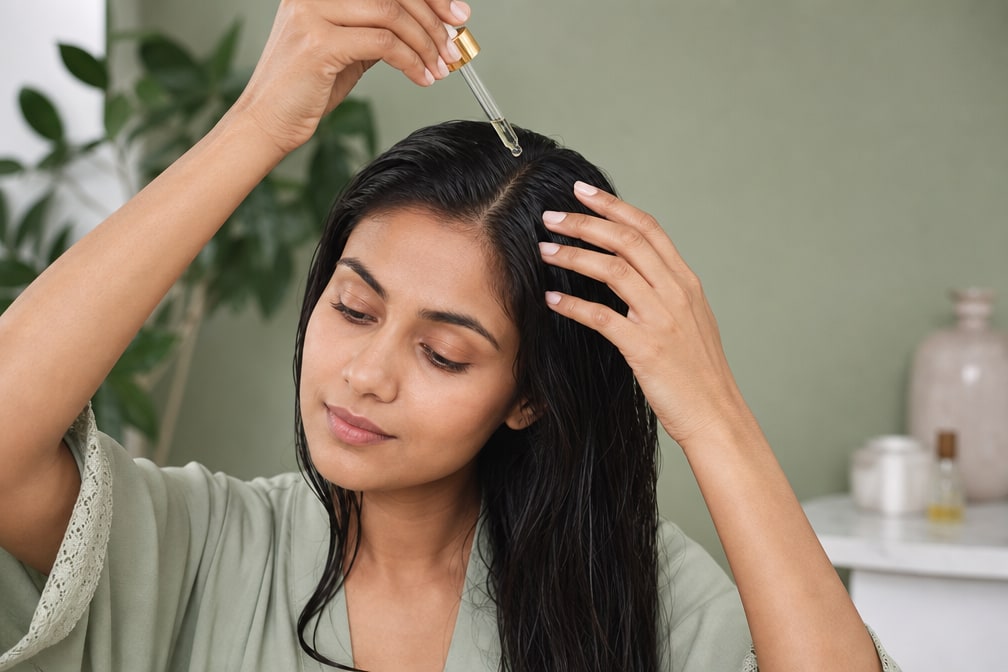
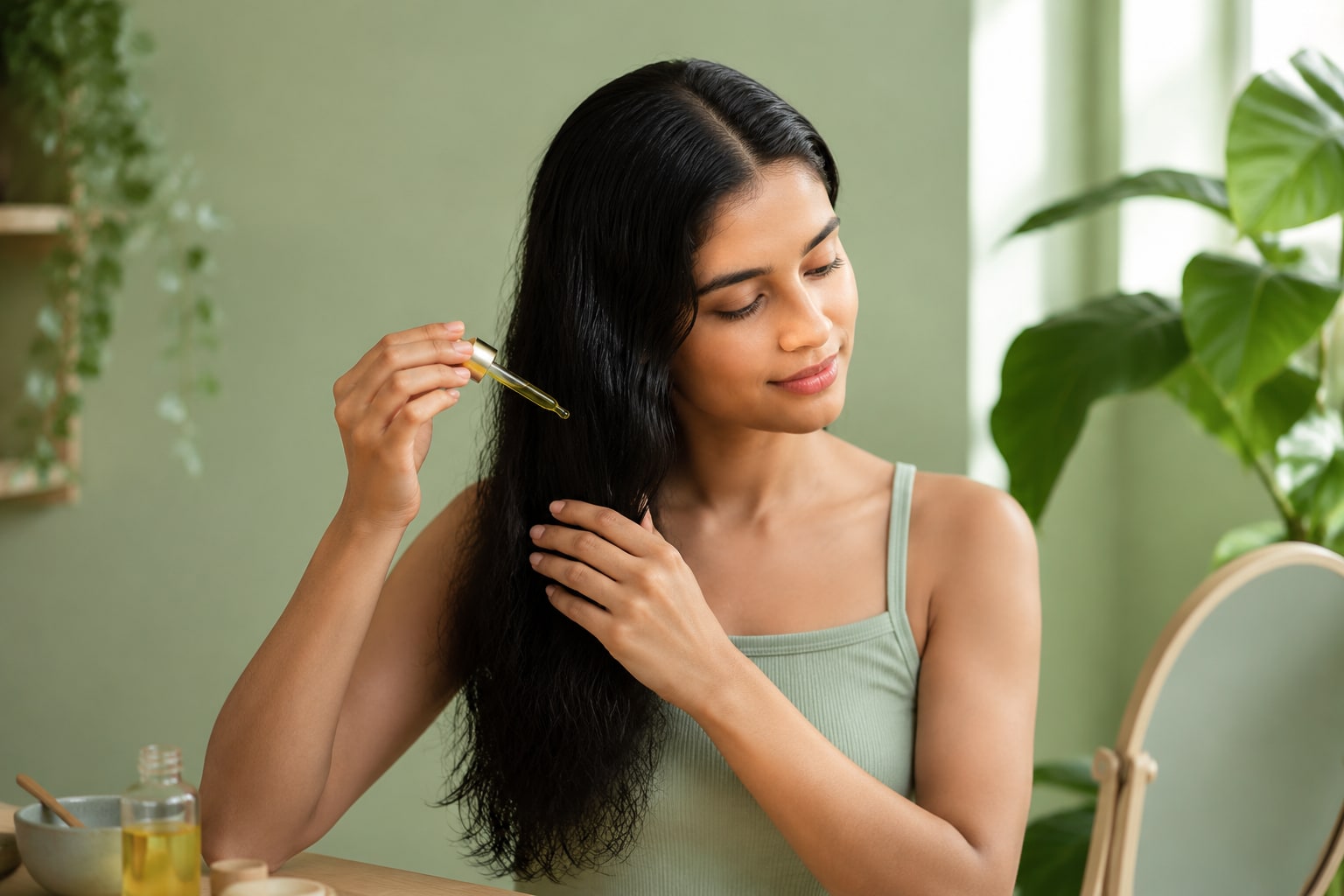
Work through one section at a time. Press oiled palms onto the hair surface from mid-length down, then glide fingers down without aggressive rubbing. For scalp work, use fingertips along the part line with gentle pressure—never scratch with nails.
Root application rule: if you are not doing a deliberate scalp treatment you plan to wash out the same day, skip roots entirely.
A wide-tooth comb can help on thick or curly sections after pressing. On fine hair, fingers alone are usually safer to avoid pulling product toward the root zone.
| Method | Contact time before next action |
|---|---|
| Pre-shampoo | 30 to 90 minutes, or overnight if protected |
| Damp seal | Air-dry or diffuse as usual |
| Dry finish | No wait; assess in one hour for shine vs. weight |
Apply to dry hair before your longest wash cycle. Focus from mid-length through ends. Cover with a bonnet or old towel if leaving on more than an hour. On wash day, shampoo dry or damp oiled hair first without initial water—emulsify, rinse, repeat if needed, then condition.
After cleansing and conditioning, blot excess water. Apply leave-in conditioner first. Warm your oil dose and press through mids and ends on damp—not dripping—hair. Style as usual. This method supports softness and frizz control without restarting your wash clock.
Warm one drop between palms and smooth over flyaways, crown halo, or rough tips. Do not rake through full length on fine hair. This is a touch-up method for polished appearance between wash days.
Fine hair, humidity frizz: One drop argan on dry ends before leaving the house. Reassess after three days; if flatness appears, skip until next wash.
Medium wavy hair, wash day softness: Two drops jojoba on damp ends after leave-in. Diffuse or air-dry. No root application.
Thick curly hair, pre-wash protection: One tablespoon coconut melted and sectioned through mids and ends for 45 minutes before shampoo.
Color-treated hair, end seal: Two drops argan on damp porous tips only after color-safe conditioner.
Oily scalp, dry lengths: Scalp bare. One drop grapeseed pressed into dry ends mid-week.
Track four signals in a simple notes app or paper log:
| Signal | Good sign | Adjust if… |
|---|---|---|
| Detangling | Less pulling on wash day | Reduce dose or switch to pre-shampoo |
| Day-two texture | Flexible, not sticky | Halve leave-in dose |
| Root lift | Volume similar to pre-oil routine | Keep oil off roots |
| Wash effort | Cleans in one or two shampoo passes | Use less product or shampoo dry first |
If three of four signals improve, keep the method and tune dose. If one or fewer improve, change timing before changing oil type.
| Day | Action |
|---|---|
| Wash day A | Pre-shampoo oil on lengths, 45 min, then full cleanse |
| Day 3 | Optional: 1 drop dry finish on ends if rough |
| Wash day B | Damp seal only, no pre-shampoo |
| Day 6 | Rest or scalp massage if planned, same-day wash |
Hair oil application succeeds when you treat it like a measured step in a larger routine. Section hair, warm a conservative dose in your palms, press product where dryness or frizz actually lives, and match timing to your next wash. Pre-shampoo methods forgive richer oils; leave-in methods demand micro-doses and root discipline.
Use the checklist to pick your window, follow the dose table for your density, and evaluate over two full weeks before declaring a product wrong for you. Precision beats volume every time—and it keeps your hair moving, shiny, and free of the buildup that turns oil from a tool into a problem.
Match technique to a ranked shortlist such as best argan oil for fine hair or best castor oil for curly hair. Dial dose with how much hair oil to use. Browse the best hair oils map.
For humidity frizz that needs a lighter leave-in than oil, see frizz serum guides on Hair Serums.
Warm a few drops between palms and press through damp or dry mid-lengths and ends. Keep length oils off the roots unless you are doing a short scalp treatment.
Pre-shampoo treatments often go on dry hair. Leave-in doses usually work on damp or dry ends. Follow the goal: seal, soften, or scalp support.
Start with a few drops for shoulder-length hair. Fine hair often needs one to two drops; thick hair may need sectioned doses. Adjust after one week.
Light leave-in doses can be frequent on ends. Richer oils are usually one to three times weekly. If hair feels coated, cut dose before cutting the oil.
For leave-in use, apply conditioner or cream first for slip, then a lighter oil seal on ends if needed.
Reduce quantity by half, move application lower on the lengths, and shift rich oils to pre-shampoo only.
A practical dosing guide for fine, medium, and thick hair with measurement tables, oil-type ranges, and a quick decision checklist.
Learn how often to oil your hair by texture, wash schedule, and scalp response, with frequency tables and a practical decision checklist.

Learn the cosmetic benefits of castor oil for hair, from moisture sealing to smoother ends, plus practical routines, doses, and what to expect.